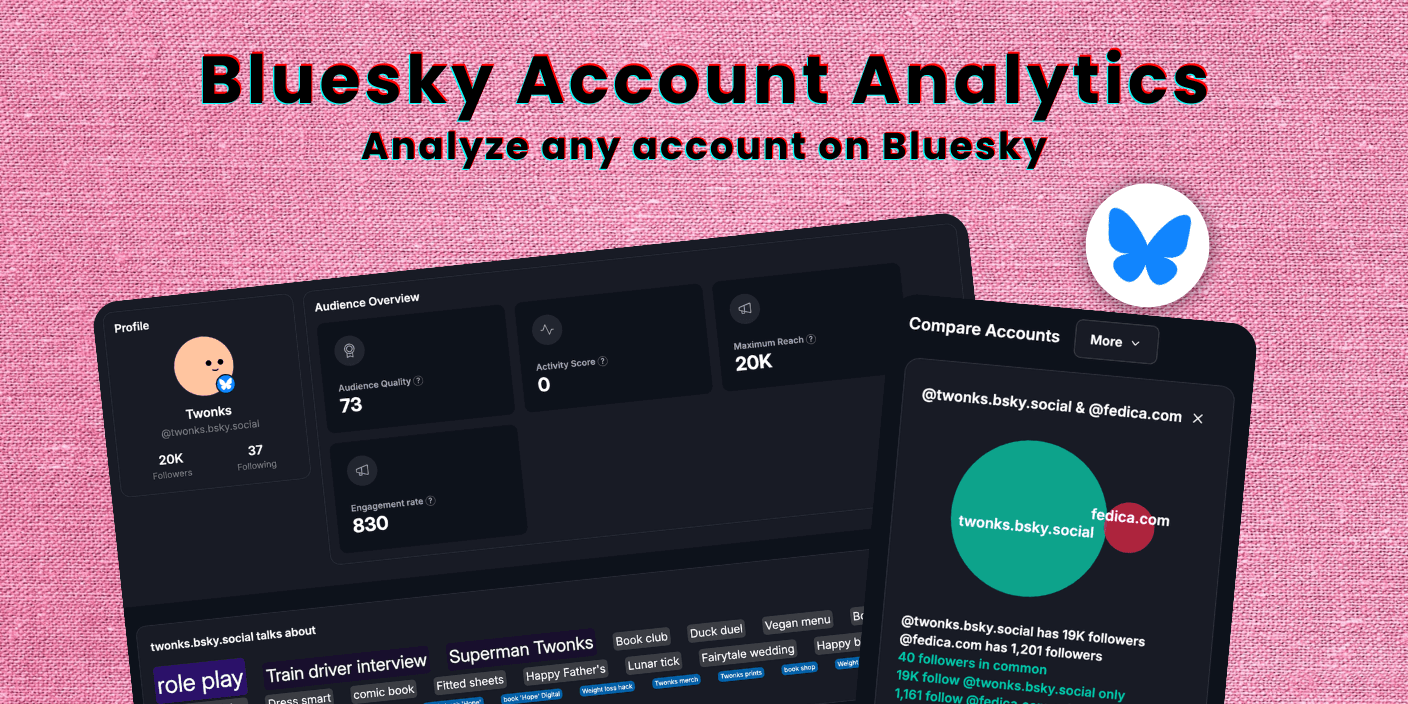
Bluesky account analysis lets you understand any account’s performance, audience, and growth patterns. Whether you’re checking your own stats, researching popular accounts, or evaluating potential collaborators, account analysis tools reveal the data behind follower counts and engagement numbers.
When you analyze a Bluesky account, you can see follower growth trends, engagement rates, posting patterns, audience demographics, top-performing content, and network connections. This helps you understand not just how many followers someone has, but who those followers are, how active they are, and what content drives the most interaction. For your own account, this data guides your content strategy. For other accounts, it helps you discover what works, find accounts with similar audiences, and make informed collaboration decisions.
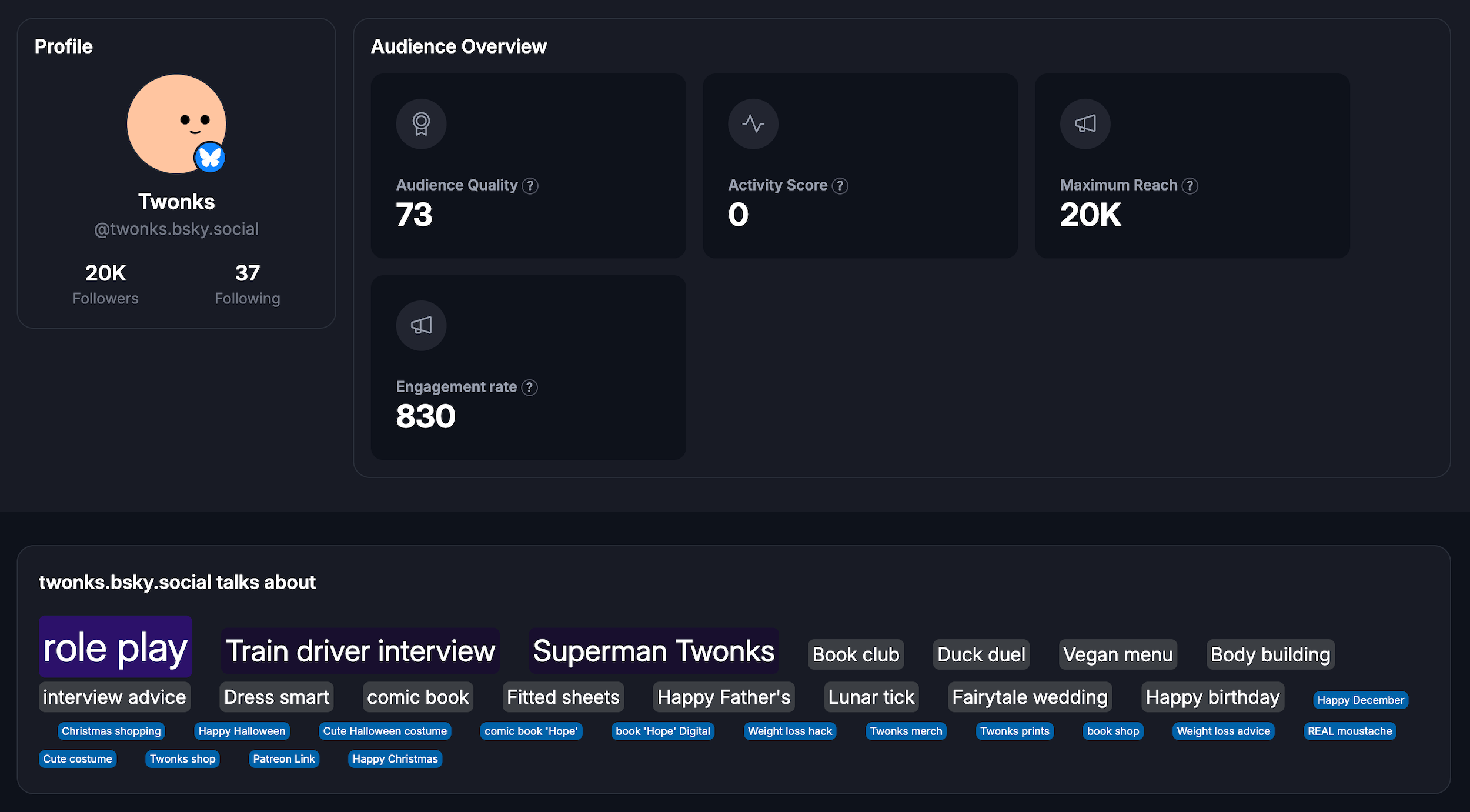
Bluesky account analysis works by using third-party tools that connect to Bluesky’s API to gather detailed account data. Unlike basic Bluesky analytics that only show your own stats, comprehensive account analysis tools let you analyze any public account. You can see who follows them, who engages with their content, what topics drive engagement, and how they connect within the Bluesky community. These insights turn account data into actionable insights that help you grow strategically and make smarter decisions about who to connect with.
Key Takeaways
- Bluesky account analysis tools let you analyze any account to see follower counts, engagement rates, posting patterns, audience demographics, growth trends, and top-performing content, revealing what makes accounts successful.
- Understand your own account performance by tracking follower growth, engagement rates, and which content types drive the most interaction, helping you optimize your posting strategy and content themes.
- Discover what makes popular accounts successful by analyzing their content themes, posting frequency, and engagement patterns, so you can learn from what works without copying their content.
- Find accounts with similar audiences by analyzing your top engagers to see who else they follow, building your network strategically rather than randomly following accounts.
- Vet potential collaborators before reaching out by checking audience alignment, engagement quality, and content consistency to avoid wasted time on partnerships that won’t benefit either party.
- Analyze other people’s strategy with a full account timeline analysis.
Table of Contents
- What Does Bluesky Account Analysis Reveal About Any Account?
- How to Evaluate Account Authenticity and Quality with Bluesky Account Analysis
- How to Find Accounts with Similar Audiences on Bluesky
- How to Understand What Works in Your Niche with Bluesky Account Analysis
- How to Evaluate Account Value with Bluesky Account Analysis
- How to Analyze Bluesky Accounts: Tools and Methods
- How to Put Bluesky Account Analysis Into Practice: A Step-by-Step Guide
- What Are Common Mistakes to Avoid in Bluesky Account Analysis?
- How to Start Making Smarter Bluesky Connections Today
What Does Bluesky Account Analysis Reveal About Any Account?
Bluesky account analysis reveals detailed insights about any account’s performance, audience, and activity patterns. Whether you’re analyzing your own account to understand your growth, checking out popular accounts to see what makes them successful, or researching potential collaborators, account analysis tools show you the data behind the numbers.
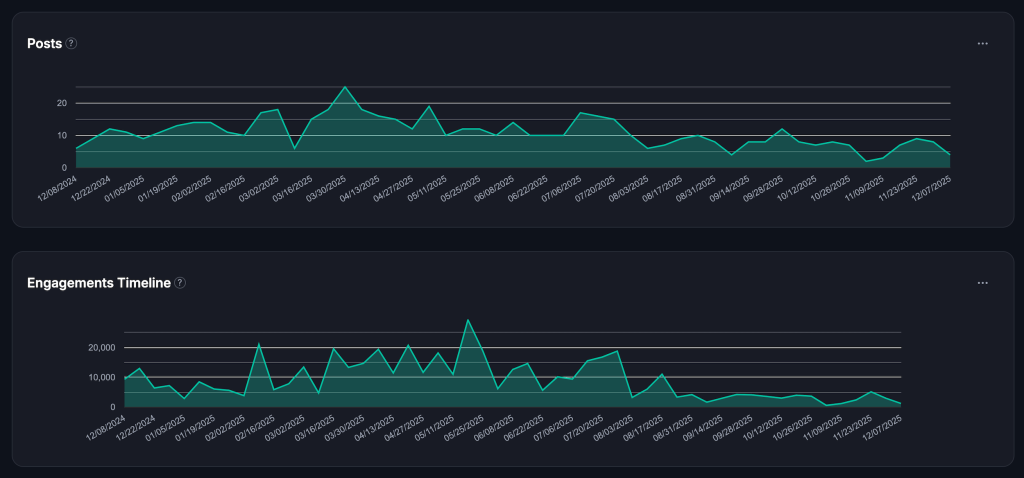
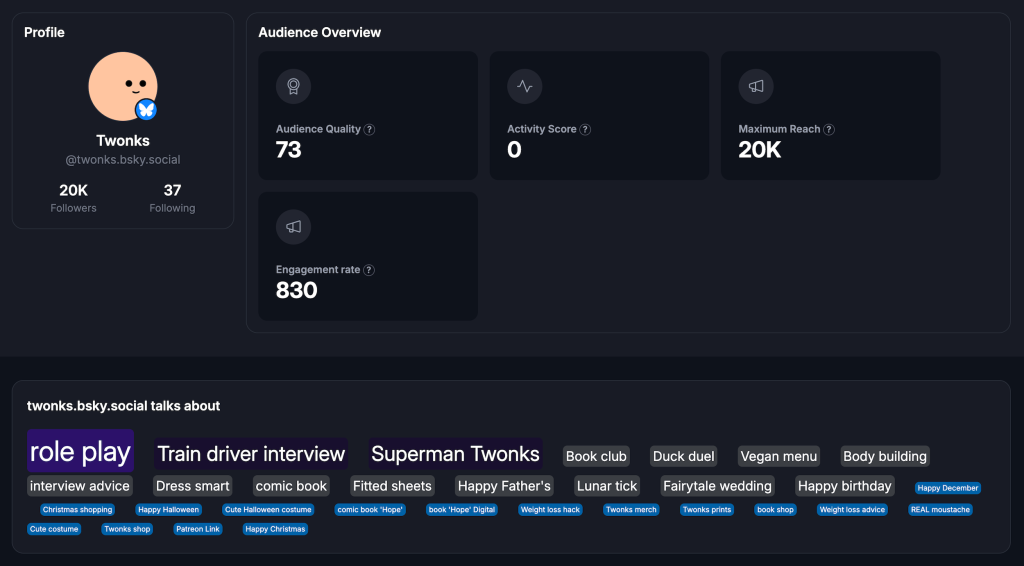
When you analyze a Bluesky account, you can see follower counts, engagement rates, posting frequency, content performance, audience demographics, growth trends, and network connections. This helps you understand not just how many followers someone has, but who those followers are, how engaged they are, and what content drives the most interaction.
Here’s what account analysis reveals:
- Follower and engagement metrics: Total followers, following count, post count, likes, reposts, and replies. You can see engagement rates (how many people interact relative to followers), which posts perform best, and whether engagement is growing or declining over time. For example, you might discover that a popular account gets 5% engagement on average, or that their most successful posts are threads rather than single posts.
- Audience demographics: Age, gender, and occupation breakdowns that show who actually follows and engages with the account. This helps you understand if an account’s audience matches your target demographic. For instance, you might find that a tech creator’s audience is 70% male, ages 25-34, working in software development. That is valuable information if you’re considering collaboration or trying to understand your own audience.
- Posting patterns and activity: How often the account posts and what content formats they use (single posts, threads, images, links). You can see if they post daily, weekly, or sporadically, and whether their posting frequency correlates with higher engagement. This is especially useful when analyzing your own account to optimize your posting frequency.
- Content themes and top-performing posts: What topics drive the most engagement, which posts got the most likes or reposts, and what content resonates with their audience. Account analysis tools can show you their most successful posts, helping you understand what works. For example, you might find that a creator’s posts about productivity tips get 3x more engagement than their personal updates.
- Follower growth trends: Whether the account is growing steadily, experiencing sudden spikes, or losing followers. You can see growth patterns over days, weeks, or months. This reveals if growth is organic (steady increase) or if there were specific events that drove spikes (like a viral post or collaboration). When analyzing your own account, this helps you understand what strategies drive growth.
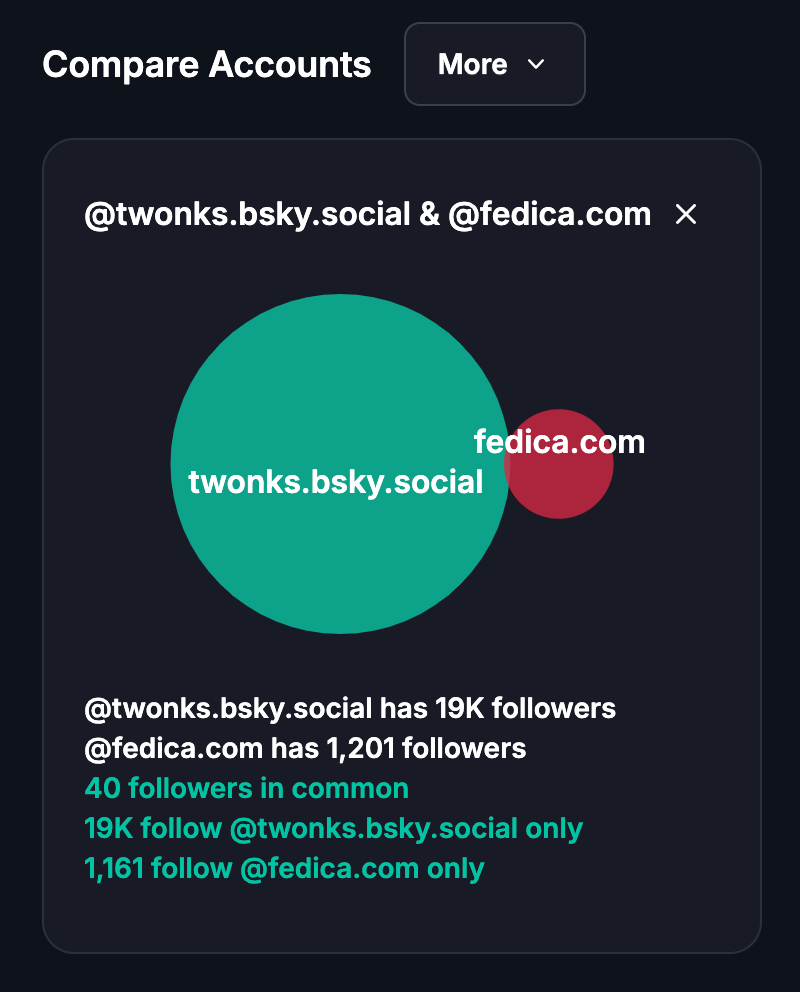
- Network connections: Mutual followers, accounts they follow, and accounts that follow them. You can see who else follows the same accounts you do, which reveals community overlap. For example, if you’re analyzing a popular account in your niche, you might discover that 40% of their followers also follow another creator you’re interested in, revealing shared audience interests.
These insights help you in multiple ways: Understanding your own account performance to optimize your content strategy, discovering what makes popular accounts successful so you can learn from their approach, and identifying potential collaborators whose audiences align with yours. Account analysis turns raw numbers into actionable insights that guide next scheduled Bluesky posts.
Full Account Analysis Preview:
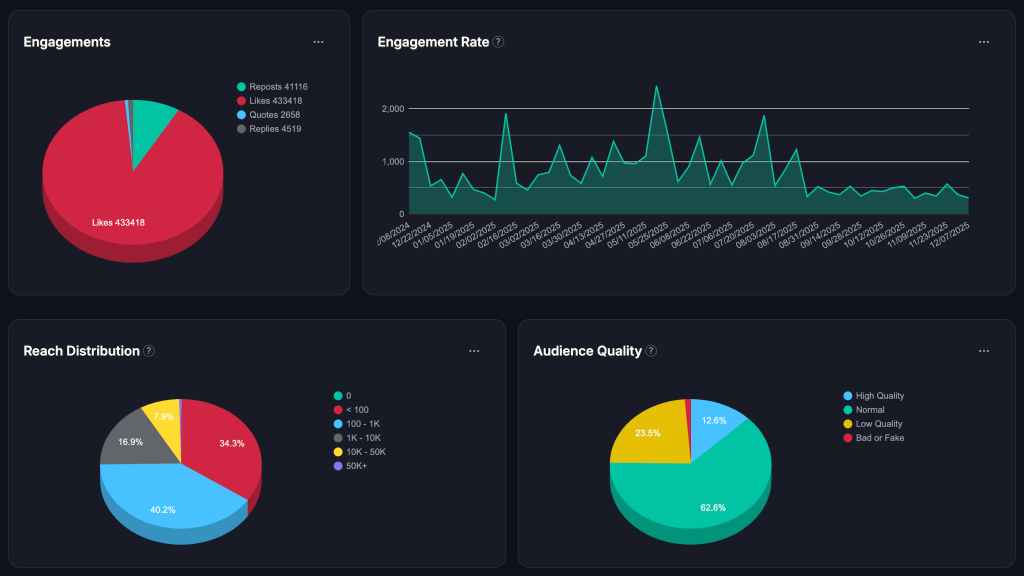
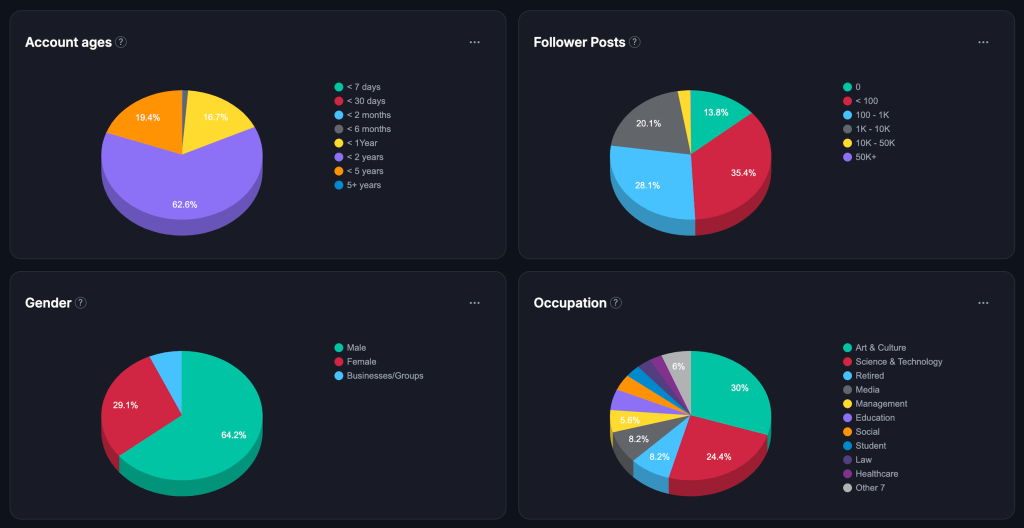
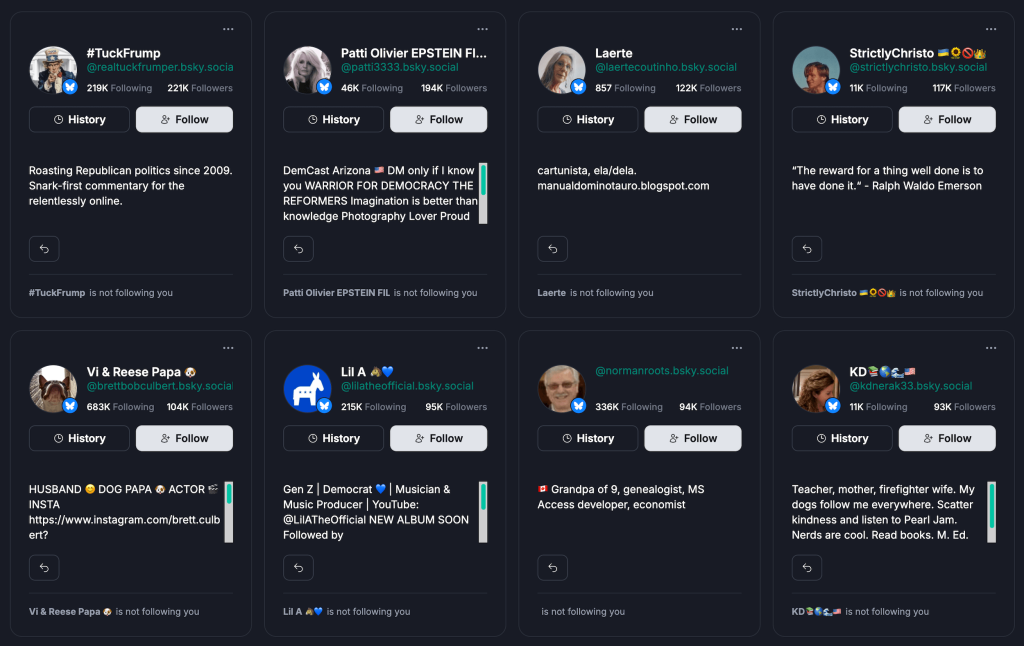
Get cross-platform analysis tools.
How to Evaluate Account Authenticity and Quality with Bluesky Account Analysis
Bluesky account analysis helps you evaluate any account’s authenticity, audience quality, and engagement patterns, whether you’re researching popular accounts, checking out competitors, or vetting potential collaborators. By analyzing account data, you can spot red flags, verify account health, and understand if an account’s audience aligns with your goals.
When you analyze an account, you’re looking at more than just follower counts. You’re checking engagement rates, audience demographics, posting consistency, growth patterns, and engagement quality. This helps you understand if an account is authentic, if their audience is engaged, and whether they’d be a good fit for collaboration or partnership.
For example, you might analyze a popular account in your niche and discover they have 50,000 followers but only get 100 likes per post (a 0.2% engagement rate that suggests many inactive or bot followers). Or you might find an account with 5,000 followers getting 500 likes per post (a 10% engagement rate indicating a highly engaged, authentic audience. These insights help you make informed decisions about who to connect with.
Here’s what account analysis reveals when evaluating accounts:
Engagement quality and authenticity: Look beyond follower counts to see who’s actually engaging. Account analysis shows you engagement rates (likes, reposts, replies relative to followers), whether engagers are real accounts with active profiles, and if engagement patterns look organic or artificial. For instance, an account with 10,000 followers getting 50 likes per post (0.5% engagement) likely has many inactive followers, while an account with 2,000 followers getting 200 likes per post (10% engagement) has a highly engaged audience. High engagement rates with real, active accounts signal authenticity.
Audience demographics and alignment: Check if their followers match your target audience demographically. Account analysis tools show age, gender, and occupation breakdowns. If you’re a tech creator targeting developers, but an account’s audience is 80% non-technical, collaboration might not benefit either party. Conversely, finding accounts with 70%+ audience overlap suggests strong collaboration potential.
Posting consistency and content themes: Review their posting frequency and content consistency. An account that posts daily with consistent themes shows reliability, while someone posting sporadically or jumping between unrelated topics might not be dependable for long-term collaboration. Account analysis reveals posting patterns over time. You can see if they post regularly or have long gaps between posts.
Growth patterns and red flags: Check follower growth trends for signs of artificial growth. Sudden spikes (gaining 5,000 followers in one day), unusually high engagement rates that don’t match follower count, or accounts following thousands but having few followers back suggest questionable growth tactics. A Bluesky unfollowers tracker can reveal accounts that follow and unfollow repeatedly, signaling low-quality engagement patterns. Organic growth shows steady increases over time, while artificial growth appears as sudden spikes or inconsistent patterns.
These insights help you avoid accounts with fake followers, low engagement, or mismatched audiences, whether you’re looking for collaborators, researching popular accounts, or evaluating competitors. Account analysis turns guesswork into data-driven decisions about which accounts are worth your time and attention.
How to Find Accounts with Similar Audiences on Bluesky
Bluesky account analysis helps you discover accounts that share your audience by analyzing network connections and mutual followers. This reveals accounts your followers also follow, helping you find creators, competitors, or potential collaborators in your niche. This approach helps you discover accounts strategically rather than randomly browsing. Instead of guessing which accounts might be relevant, account analysis reveals the actual connections between accounts, showing you who your audience follows and engages with.
Here’s how to find accounts with similar audiences:
Analyze your top engagers: Start by identifying who engages with your content most. Account analysis tools show your top engagers: accounts that like, repost, or reply to your posts frequently. Then analyze those accounts to see who else they follow. Accounts that appear in multiple top engagers’ following lists likely share your audience. For instance, if 5 of your top 10 engagers all follow the same account, that account probably has a similar audience to yours.
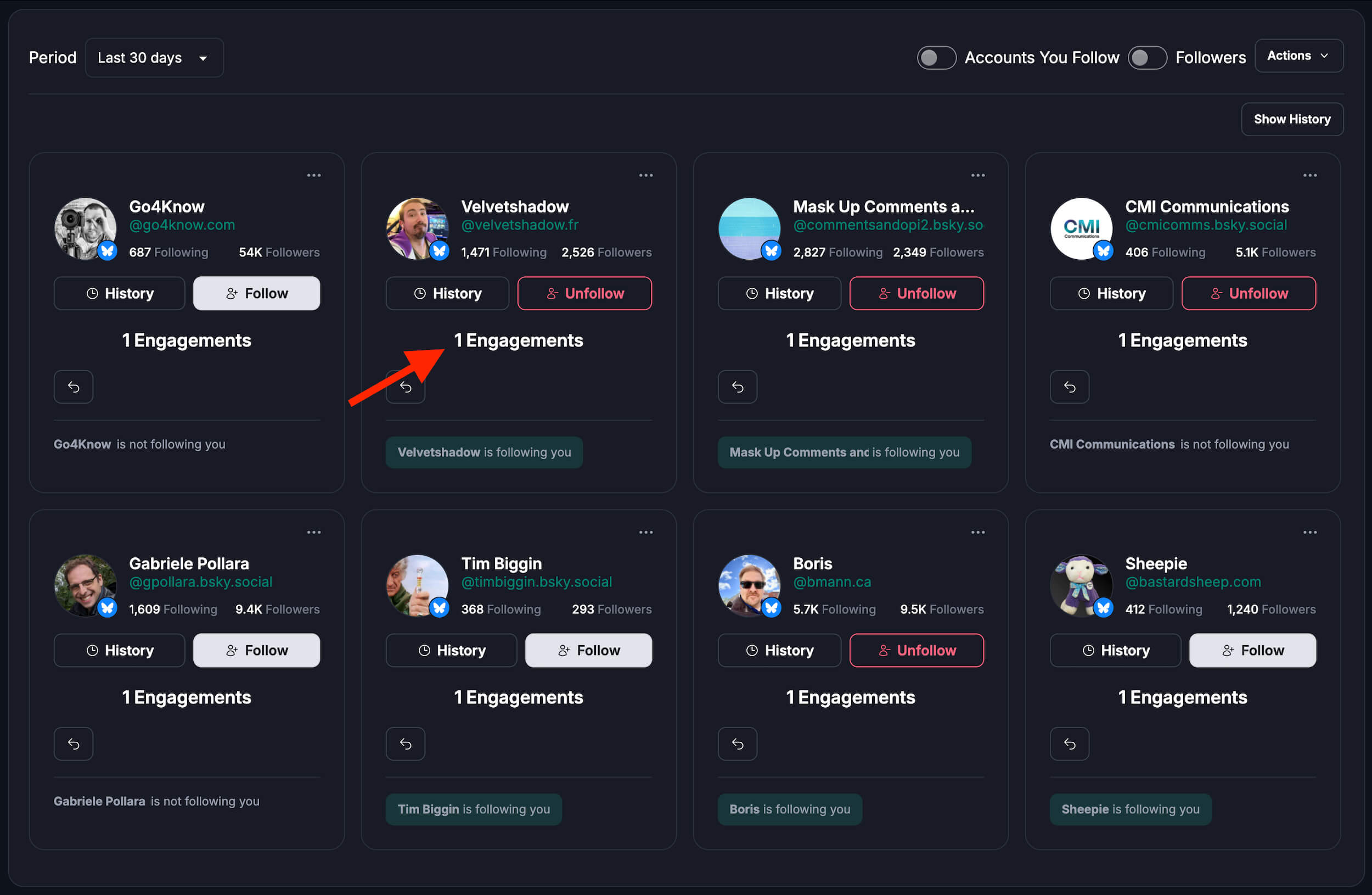
Not ready for Research tools?
Get Top Engagers and more with the Grow Plan instead!
Check mutual followers: Use account analysis to see mutual followers between your account and others. High mutual follower counts (30%+ overlap) suggest audience alignment. You can search for accounts in your niche and check mutual follower counts to find ones with similar audiences. Search Bluesky followers by keywords in their bios or use Bluesky advanced search to filter accounts strategically.
Map network connections: Advanced account analysis tools let you analyze multiple accounts in sequence, mapping relationships between accounts. You can see who follows who, identify community clusters, and discover accounts you might never find through random browsing. This network analysis reveals accounts that are part of the same community as you, making them ideal for engagement, collaboration, or learning from their strategies.
Many basic analytics tools show you your top engagers, but they don’t let you analyze those accounts to see who else they follow. Advanced account analysis tools let you dig deeper: analyzing your top engagers’ accounts to discover their other connections, then analyzing those accounts to understand audience overlap and community relationships. This helps you build your network strategically and find accounts that share your audience.
How to Understand What Works in Your Niche with Bluesky Account Analysis
Bluesky account analysis helps you learn from successful accounts in your niche by analyzing their content themes, posting patterns, and engagement strategies. Instead of guessing what works, you can see what actually drives engagement for top accounts in your space.
When you analyze popular accounts in your niche, you can see what topics they post about, how often they publish, which content formats perform best, and how they engage with their audience. This reveals patterns and strategies you can apply to your own content without copying.
For example, you might analyze 5 top tech creators and discover they all post productivity tips on weekdays at 9 AM, get 3x more engagement on threads than single posts, and reply to comments within 2 hours. These insights help you optimize your own strategy based on what actually works, not assumptions.
Here’s what account analysis reveals about what works in your niche:
Content themes that drive engagement: Analyze multiple successful accounts to see what topics they post about and what language they use. Account analysis tools show you content themes, top-performing posts, and which topics get the most likes, reposts, and replies. For instance, you might find that productivity creators get 5x more engagement on “morning routine” posts than “productivity tools” posts, revealing what resonates with your shared audience.
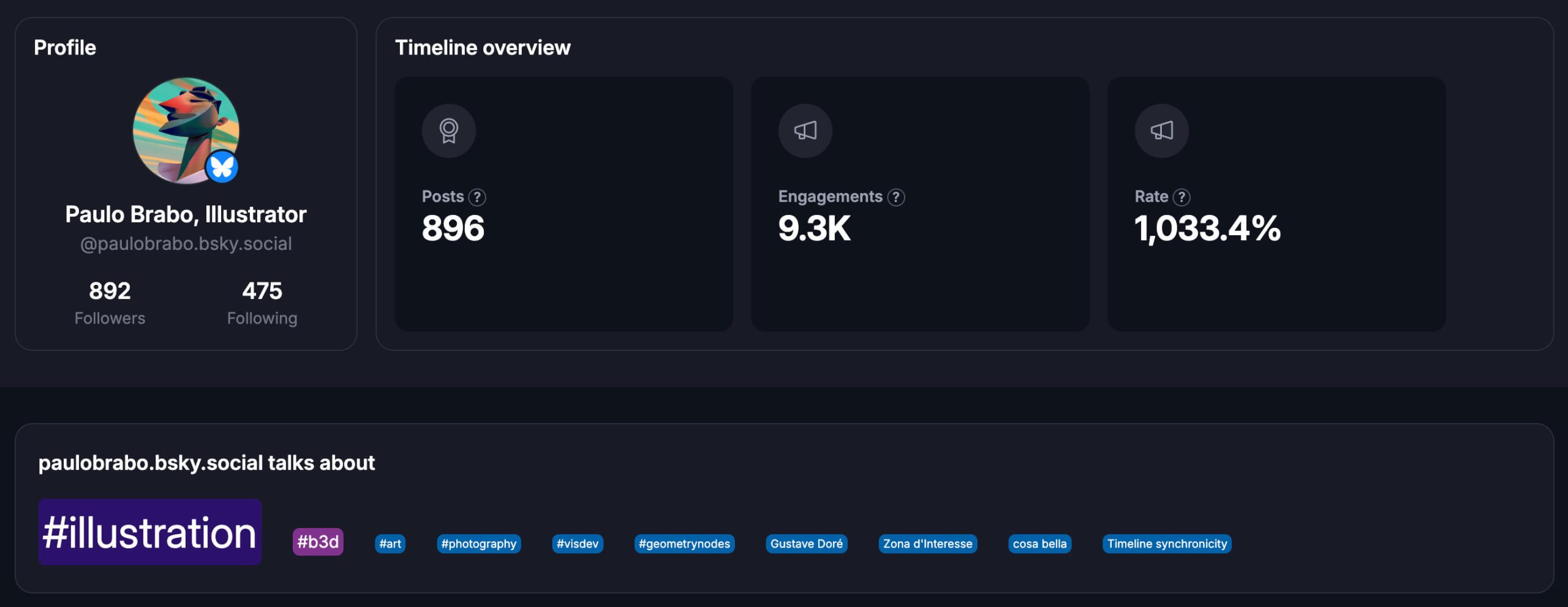
Posting patterns and frequency: See how often successful accounts post. Account analysis reveals posting frequency (daily, weekly, multiple times per day). You can identify patterns. Maybe accounts in your niche post 3-5 times per week and get consistent engagement. Understanding these patterns helps you optimize your own posting frequency.
Content formats that perform best: Discover which content formats drive the most engagement. Do top accounts use threads, single posts, images, links, or a mix? Account analysis shows you which post types get the most likes, reposts, and replies. For example, you might find that accounts in your niche get 2x more engagement on threads than single posts, helping you decide which format to prioritize.
Engagement strategies that work: See how top accounts engage with their audience. Do they reply to comments quickly? Do they repost others’ content? Do they create original threads or share links? Account analysis reveals engagement patterns: response times, repost frequency, and interaction styles. Learning their approach helps you build similar relationships with your audience.
The key is using account analysis to understand principles and patterns, not to copy content. You’re learning what works so you can apply those insights to your unique voice and content. Account analysis turns niche research into actionable insights that guide your content strategy and help you grow faster.
How to Evaluate Account Value with Bluesky Account Analysis
Bluesky account analysis helps you understand an account’s actual value by looking beyond follower counts to see engagement quality, audience authenticity, and account health. Whether you’re researching popular accounts, evaluating potential collaborators, or comparing accounts in your niche, account analysis reveals what the numbers actually mean.
When you analyze an account, you can see engagement rates, audience demographics, posting consistency, growth patterns, and engagement quality. This helps you understand if an account is valuable, authentic, and worth your attention, not just how many followers they have.
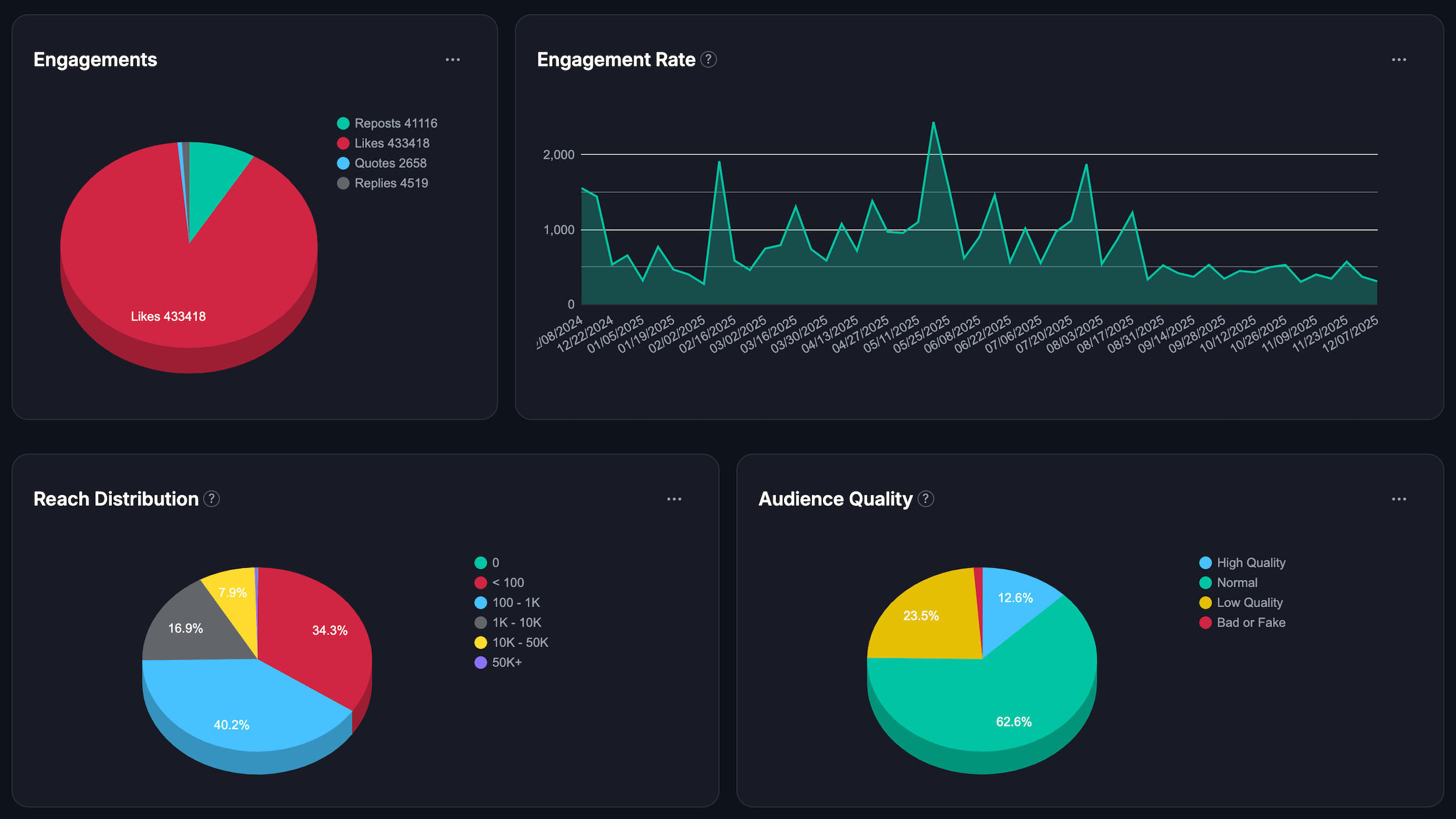
For example, you might analyze an account and discover they have 20,000 followers but only get 100 likes per post (0.5% engagement), suggesting many inactive followers. Or you might find they have 5,000 followers getting 500 likes per post (10% engagement), indicating a highly engaged, authentic audience. The second account is likely more valuable despite having fewer followers.
Here’s how to evaluate account value:
Compare engagement rates, not just follower counts: An account with 10,000 followers getting 200 likes per post (2% engagement) might be less valuable than an account with 3,000 followers getting 400 likes per post (13% engagement). Account analysis shows you actual engagement rates, helping you understand which accounts have real, active audiences versus accounts with many inactive followers.
Check engagement quality: Look at who’s engaging: are they real accounts with active profiles, or bots and empty accounts? Account analysis reveals whether engagers are authentic. High engagement from real, active accounts signals value, while engagement from bots or inactive accounts suggests low value. For instance, an account getting 500 likes from accounts with complete profiles and recent activity is more valuable than an account getting 1,000 likes from accounts with no profile pictures.
Review growth patterns: Is their account growing organically or artificially? Account analysis shows growth trends: steady increases suggest organic growth and value, while sudden spikes might indicate artificial growth tactics. An account that gained 1,000 followers steadily over 3 months is likely more valuable than an account that gained 5,000 followers in one day.
Assess posting consistency: Accounts that post regularly with consistent themes show reliability and value. Account analysis reveals posting patterns: daily posting suggests active engagement, while sporadic posting might indicate low commitment. For example, an account posting 3-5 times per week with consistent content themes is likely more valuable than an account posting once every few weeks.
These insights help you identify valuable accounts worth connecting with, whether you’re looking for accounts to learn from, potential collaborators, or accounts with similar audiences. Account analysis turns follower counts into meaningful insights about account value, helping you focus on accounts that actually matter.
How to Analyze Bluesky Accounts: Tools and Methods
You analyze Bluesky accounts using third-party tools that connect to Bluesky’s API to gather account data. These tools let you examine any account’s follower counts, engagement rates, posting patterns, audience demographics, content themes, growth trends, and network connections, revealing insights you can’t get from Bluesky’s basic interface.
Effective account analysis tools offer the ability to analyze any Bluesky account, not just your own. They show you follower demographics, engagement patterns, posting frequency, content performance, and network relationships. This helps you understand account performance, discover what works, find accounts with similar audiences, and evaluate potential collaborators.
Unlike basic analytics that only show your own account’s performance, comprehensive Bluesky analytics reveal the people and relationships behind the numbers. This helps you understand audience quality, engagement authenticity, and account health beyond surface-level metrics. Understanding Bluesky’s content moderation settings also helps you assess account context, as accounts with content labels may have different visibility and audience reach.
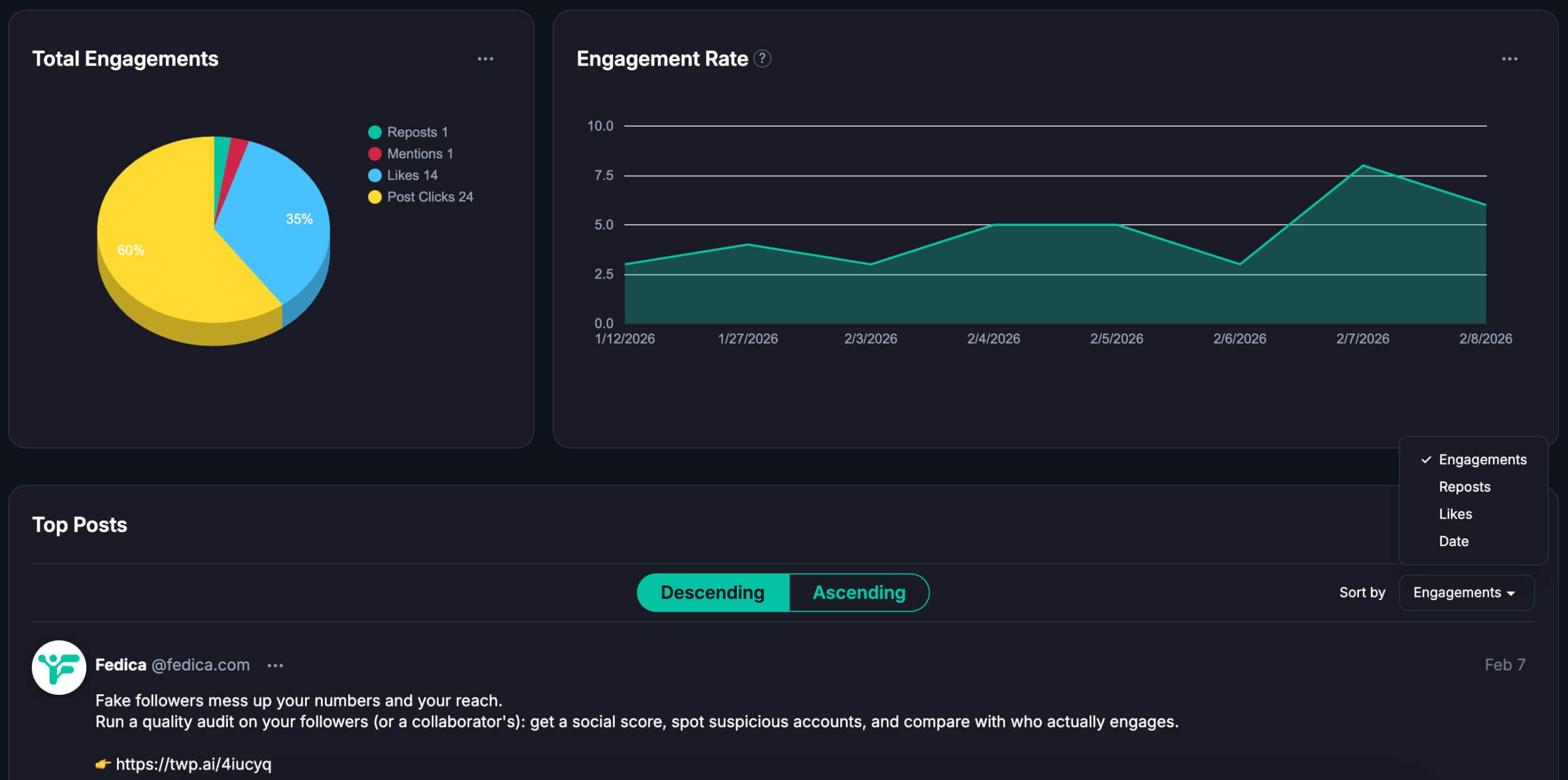
Here’s what to look for in account analysis tools:
Account analysis for any account: The ability to analyze any Bluesky account, not just your own. You should be able to enter any handle and see follower demographics, engagement patterns, posting frequency, content themes, and growth trends. This lets you research popular accounts, check competitors, or evaluate potential collaborators. For example, you can analyze @username to see their follower count, engagement rate, top posts, and audience demographics.
Follower and engagement insights: Detailed information about who follows an account and who engages with their content. The best account analysis tools show you follower demographics (age, gender, occupation), engagement quality (real accounts vs. bots), and engagement patterns (which posts perform best). This helps you understand audience quality and alignment beyond basic follower counts. For instance, you might see that an account’s followers are 60% male, ages 25-34, working in tech. These are valuable insights for understanding their audience.
Filtering and search capabilities: The ability to filter accounts by keywords in bios, follower counts, engagement rates, and other criteria. Advanced account analysis tools let you search strategically: find accounts by keywords in their bios, filter by demographics, discover accounts your top engagers also follow, or search for accounts with specific engagement rates. This helps you discover accounts strategically rather than randomly browsing. For example, you can search for accounts with “productivity” in their bio, filter by 5,000-10,000 followers, and see which ones have 5%+ engagement rates.
Network analysis and relationships: Tools that show mutual followers, accounts someone follows, and relationship mapping. This reveals community connections: who follows who, mutual connections, and community overlap. Network analysis helps you find accounts with similar audiences, understand community clusters, and discover accounts you might never find through random browsing. For instance, you can see that you share 300 mutual followers with another account (30% overlap), suggesting similar audiences.
Some tools only show basic follower lists or your own analytics, but comprehensive account analysis includes network mapping, demographic breakdowns, engagement quality assessment, and the ability to analyze any account. Comprehensive account analysis tools combine these features in one platform: analyze any account, filter followers and engagements by demographics and topics, search accounts by keywords in bios, analyze follower quality, understand engagement patterns, and map network relationships.
Unlike tools that focus only on your own analytics or offer limited account analysis, comprehensive tools give you the depth needed to understand account performance, discover what works, find accounts with similar audiences, and make informed decisions about collaborations and partnerships. You see not just numbers, but the people, relationships, and patterns behind them.
See all that’s available with Bluesky Analytics!
How to Put Bluesky Account Analysis Into Practice: A Step-by-Step Guide
You put Bluesky account analysis into practice by analyzing any account’s basics, audience demographics, engagement quality, content themes, and network connections. Whether you’re researching your own account performance, checking out popular accounts, or evaluating potential collaborators, this step-by-step process helps you understand what the data reveals.
We’ve seen creators save hours of wasted time by analyzing accounts first. One creator we worked with almost partnered with an account that looked great on the surface (20,000 followers, regular posting). But account analysis revealed their audience was 80% bots and their engagement was artificially inflated (only 0.3% engagement rate). Another creator analyzed their own account and discovered their productivity tips got 5x more engagement than their personal updates, helping them optimize their content strategy.
Here’s how to analyze any Bluesky account step-by-step:
Step 1: Analyze account basics. Start by checking follower count, following count, post count, posting frequency, and engagement rates. Account analysis tools let you see these metrics for any account, not just your own. For example, you might find an account has 10,000 followers, posts 3 times per week, and gets an average of 200 likes per post (2% engagement rate). These numbers give you a baseline understanding of their account size and activity level.
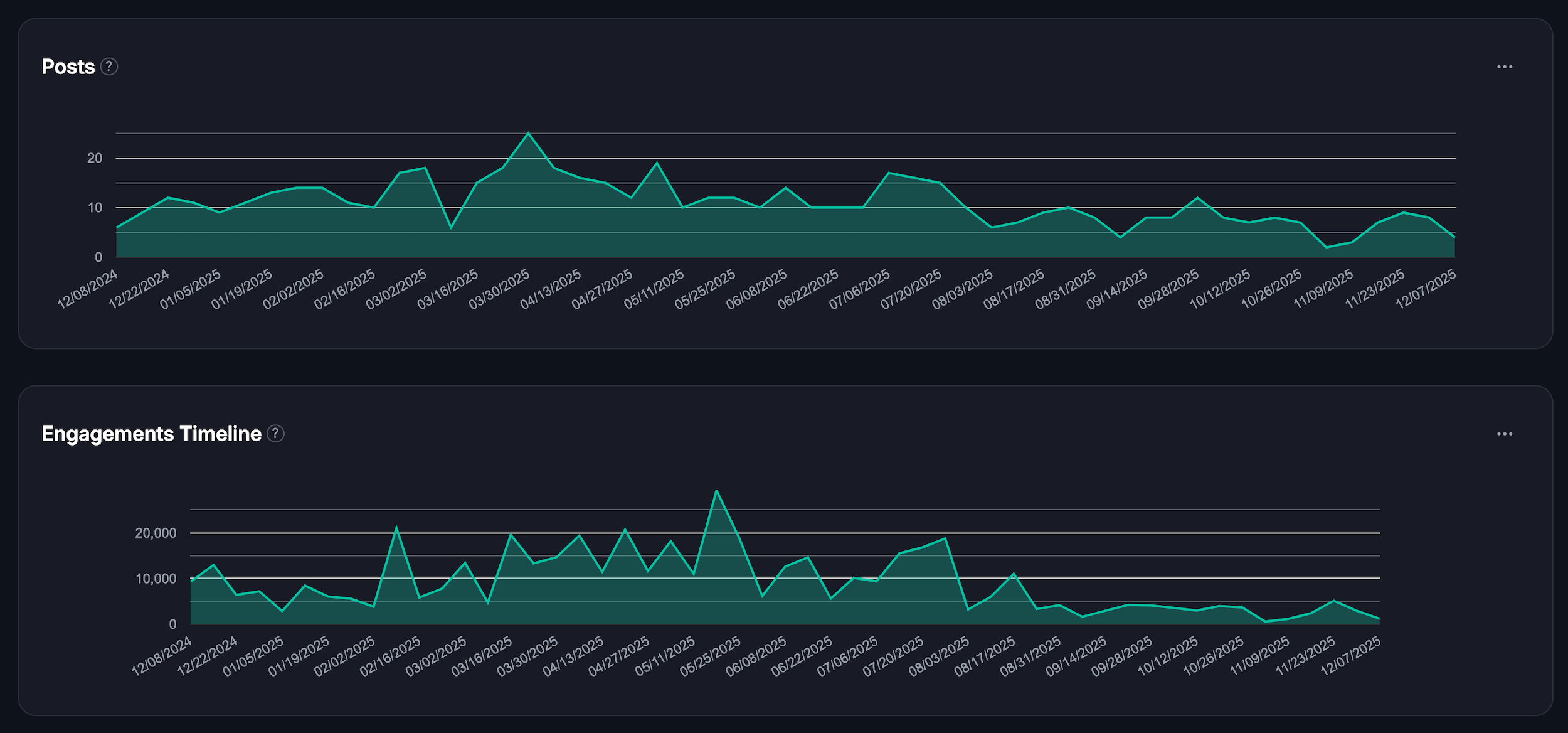
Compare these numbers to what you’d expect for accounts in that niche. A tech creator with 5,000 followers getting 500 likes per post (10% engagement) is performing well, while a creator with 50,000 followers getting 100 likes per post (0.2% engagement) likely has many inactive followers.
Step 2: Examine audience demographics. Who follows this account? Account analysis tools break down follower demographics by age, gender, and occupation. This helps you understand their audience composition. For instance, you might discover that a productivity creator’s followers are 65% male, ages 25-40, working in tech and business. These are valuable insights for understanding their audience.
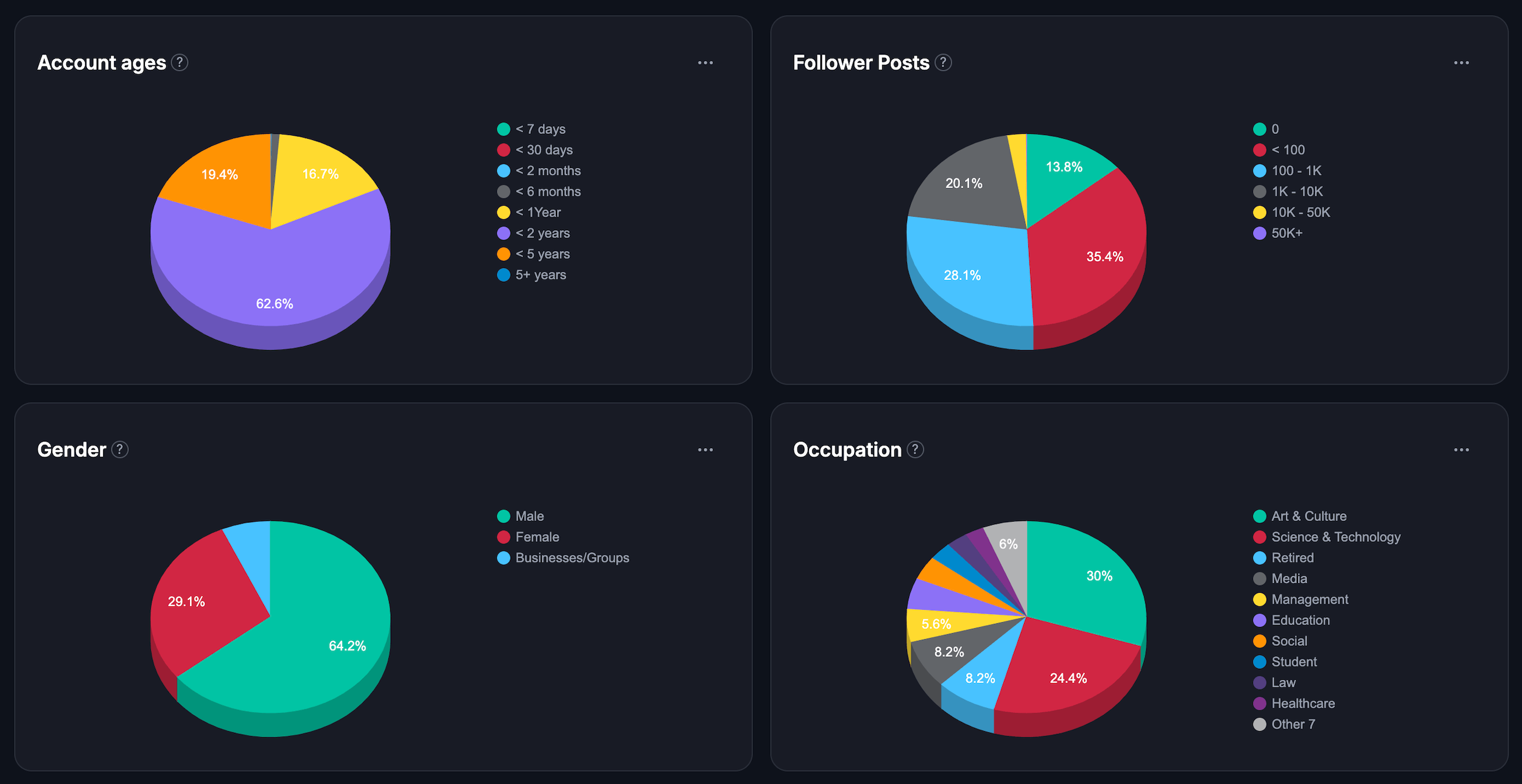
If you’re analyzing your own account, this reveals who your actual audience is. If you’re researching other accounts, this shows whether their audience matches your target demographic. For collaboration decisions, high demographic overlap (70%+) suggests audience alignment.
Step 3: Assess engagement quality. Who’s engaging with their content? Are engagers real accounts with active profiles, or do you see patterns suggesting artificial engagement? Account analysis tools show you actual engager profiles, demographics, and activity patterns.
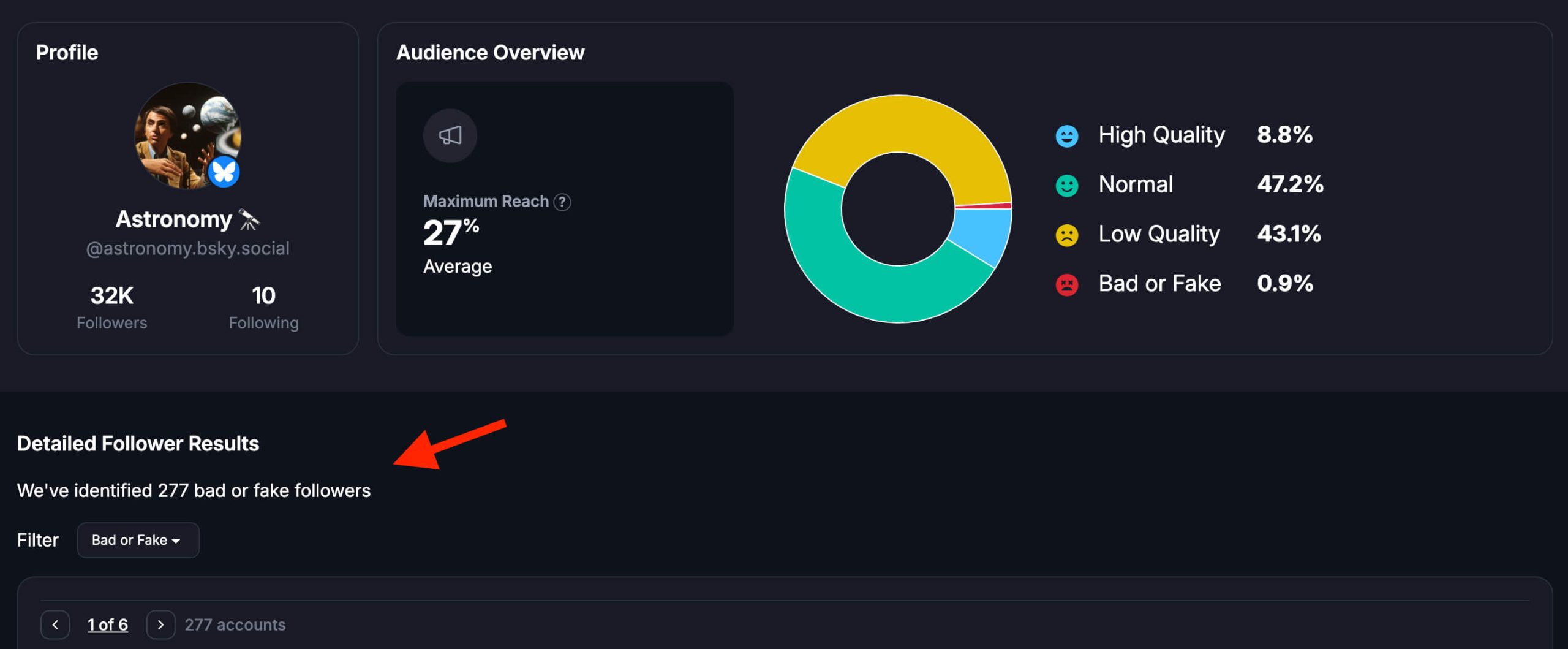
Look for signs of authentic engagement: real accounts with profile pictures, bios, and recent activity. Red flags include accounts with no profile pictures, generic usernames, or accounts that only engage once then disappear. High-quality engagement from real, active accounts signals an authentic community. For example, an account with 2,000 followers getting 300 likes from accounts with complete profiles and regular activity indicates genuine engagement.
Step 4: Review content themes and top-performing posts. What topics do they cover? What formats work best? Account analysis tools filter analytics by topics and keywords, showing you content themes and top-performing posts. This reveals what content drives engagement for them.
For your own account, this helps you understand what resonates with your audience. For other accounts, this shows what works in your niche. For example, you might find that a creator’s threads about “morning routines” get 3x more engagement than their single posts about “productivity tools,” revealing content format preferences. If evaluating collaborators, check if their content themes align with your brand values.
Step 5: Check growth trends and patterns. Is their account growing organically? Are they posting consistently? Account analysis reveals follower growth over time: steady increases suggest organic growth, while sudden spikes might indicate artificial growth. You can also see posting patterns: do they post daily, weekly, or sporadically?
For your own account, this helps you understand what strategies drive growth. For other accounts, this reveals account health and reliability. For example, an account that gained 1,000 followers steadily over 3 months suggests organic growth, while an account that gained 5,000 followers in one day likely used questionable tactics.
Step 6: Analyze network connections. Who do they follow? Who follows them? Do you share mutual followers? Advanced account analysis tools show mutual followers and network relationships, revealing community overlap and connections.
For your own account, analyzing your top engagers’ other connections helps you discover accounts with similar audiences. For other accounts, high mutual follower counts (30%+ overlap) suggest audience alignment. For example, if you share 300 mutual followers with another account out of your 1,000 followers, that’s 30% overlap indicating similar audiences.
Step 7: Make decisions based on insights. Use the analysis to guide your actions. If analyzing your own account, optimize your content strategy based on what works. If researching popular accounts, learn from their successful patterns. If evaluating collaborators, decide if partnership makes sense based on audience alignment, engagement quality, and content themes.
This process turns account analysis into actionable insights. The key is using tools that give you depth: not just numbers, but the people, relationships, and patterns behind them. Whether you’re understanding your own performance, discovering what works, or evaluating potential partners, account analysis provides the data you need to make informed decisions.
What Are Common Mistakes to Avoid in Bluesky Account Analysis?
Common mistakes in Bluesky account analysis include over-analyzing every detail until you’re paralyzed, focusing on wrong metrics like follower count alone, ignoring qualitative factors like authentic engagement, and not considering context like niche differences that affect what works.
The biggest mistake is getting stuck analyzing every possible metric instead of focusing on what matters for your specific goal, whether that’s understanding your own account performance, discovering what works in your niche, or evaluating potential collaborators.
Here are the most common mistakes to avoid:
Over-analyzing and analysis paralysis: Don’t get stuck analyzing every detail. Focus on the metrics that matter for your goal. If you’re analyzing your own account, focus on engagement rates, top-performing content, and growth trends. If you’re researching popular accounts, focus on content themes and posting patterns. If you’re evaluating collaborators, focus on audience alignment and engagement quality. Set a time limit: spend 15-20 minutes analyzing an account, then make a decision based on the key insights.
Focusing on wrong metrics: Follower count alone doesn’t tell you much. A smaller account with highly engaged followers might be more valuable than a large account with low-quality engagement. For example, an account with 2,000 followers getting 300 likes per post (15% engagement) is likely more valuable than an account with 20,000 followers getting 100 likes per post (0.5% engagement). Look at engagement rates, audience demographics, and content themes, not just follower counts.
Ignoring engagement quality: Not all engagement is equal. Account analysis tools show you who’s engaging: are they real accounts with active profiles, or bots and inactive accounts? High engagement from real, active accounts signals authenticity, while engagement from empty profiles or bots suggests artificial growth. For instance, an account getting 500 likes from accounts with complete profiles and recent activity is more valuable than an account getting 1,000 likes from accounts with no profile pictures or activity.
Not considering context and niche differences: An account’s performance depends on their niche, goals, and audience. What works for a tech creator might not work for an artist. A 5% engagement rate might be excellent for a tech account but average for a lifestyle account. Consider context when analyzing accounts: compare accounts within the same niche, not across different niches. For example, don’t compare a productivity creator’s engagement rates to a meme account’s engagement rates.
Ignoring qualitative factors: Data tells part of the story, but don’t ignore how an account feels. Do they engage authentically with their audience? Is their content valuable and consistent? Do they represent values you align with? These qualitative factors matter as much as numbers. An account might have great metrics but post content that doesn’t align with your brand or values.
Not analyzing your own account regularly: Many people analyze other accounts but forget to analyze their own. Regular analysis of your own account helps you understand what’s working, what’s not, and how to optimize your strategy. Set aside time weekly or monthly to review your account performance, top posts, and growth trends.
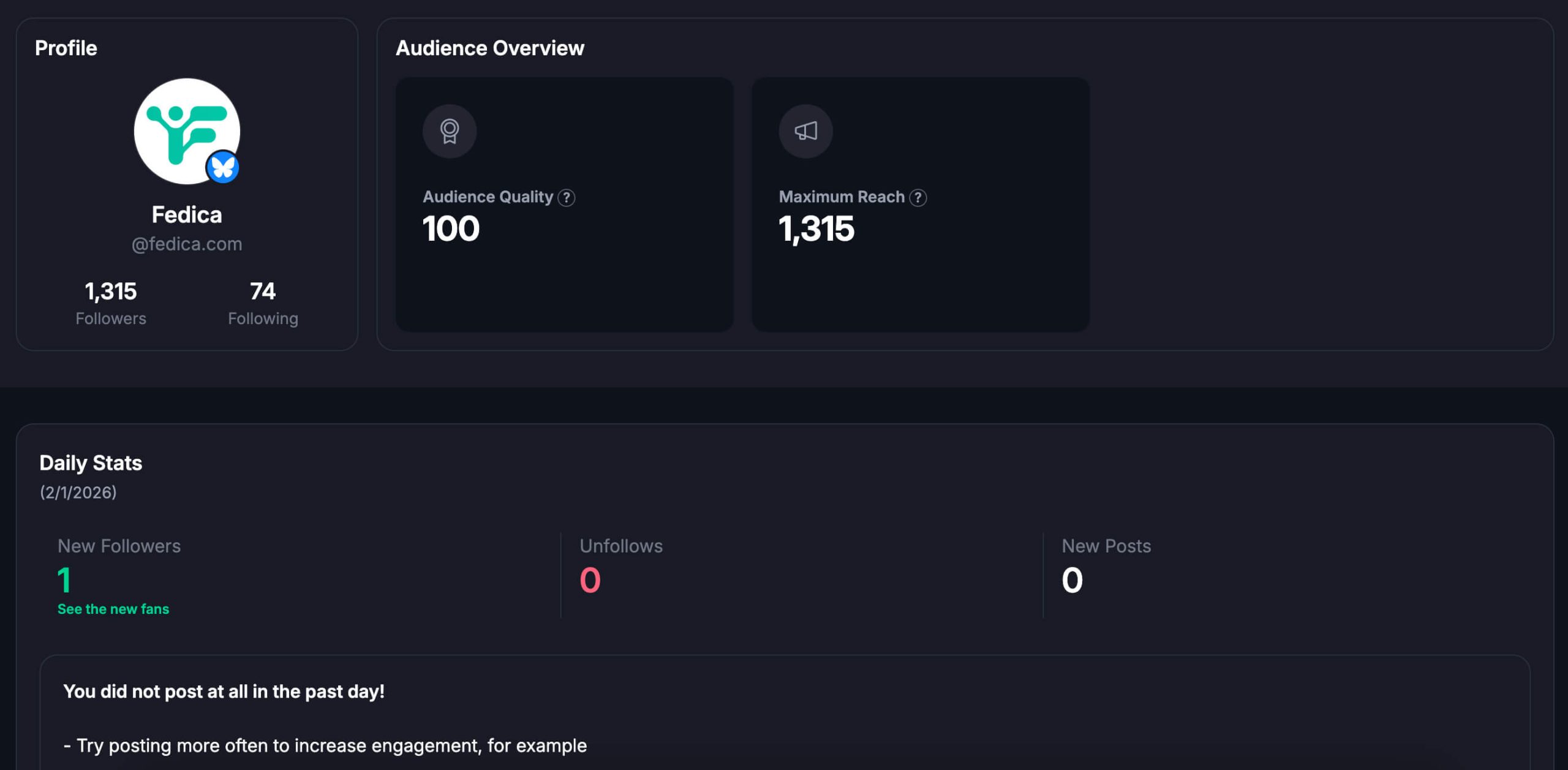
Keep analysis focused on your goals, use both data and intuition to make decisions, and remember that account analysis is a tool to inform decisions, not replace your judgment. The key is balancing data-driven insights with your understanding of what makes sense for your specific situation.
Need to start with just analyzing your own growth and analytics?
How to Start Making Smarter Bluesky Connections Today
Start using Bluesky account analysis today to understand account performance, discover what works, and make informed decisions about who to connect with. Whether you’re analyzing your own account to optimize your strategy, researching popular accounts to learn from their success, or evaluating potential collaborators, account analysis provides the insights you need.
Bluesky has grown from 25.94 million users at the end of 2024 to 41.41 million users by the end of 2025. This makes it an increasingly important platform for creators and businesses, and understanding account performance has never been more valuable.
Here’s how to get started:
Analyze your own account first: Start by understanding your own account performance. Use account analysis tools to see your follower growth, engagement rates, top-performing posts, and audience demographics. This baseline helps you understand what’s working and what needs improvement. For example, you might discover that your productivity tips get 5x more engagement than your personal updates, helping you focus on what resonates with your audience.
Research popular accounts in your niche: Analyze successful accounts in your niche to learn what works. Look at their content themes, posting patterns, engagement strategies, and audience demographics. This helps you understand what drives engagement in your space without copying their content. For instance, you might find that top accounts in your niche post threads 3 times per week at 9 AM and get 3x more engagement than single posts.
Find accounts with similar audiences: Use account analysis to discover accounts your top engagers also follow. Check mutual follower counts to find accounts with audience overlap. This helps you discover creators, competitors, or potential collaborators who share your audience. For example, if 60% of your top engagers also follow a specific account, that account likely has a similar audience to yours.
Evaluate accounts before connecting: Before reaching out to potential collaborators or partners, analyze their accounts to check audience alignment, engagement quality, and content themes. This helps you make informed decisions about who to connect with and avoid wasting time on accounts that won’t benefit you. For instance, you might discover an account has 20,000 followers but only 0.5% engagement, suggesting many inactive followers.
Bluesky account analysis turns account data into actionable insights. Instead of guessing what works or randomly following accounts, you can use data to guide your strategy, understand your audience, and make informed decisions about connections. This approach helps you grow strategically and focus your time and energy on what actually helps you grow.
Ready to start analyzing Bluesky accounts? Try Fedica’s Bluesky account analysis tools to analyze any account, understand your own performance, discover what works in your niche, and find accounts with similar audiences. See follower demographics, engagement patterns, content themes, and network connections, all based on actual data rather than guesses.
Frequently Asked Questions
Is there analytics for Bluesky?
Bluesky doesn’t offer native analytics within the app, but third-party tools like Fedica provide comprehensive Bluesky analytics. These tools let you track engagement, follower growth, post performance, and analyze any Bluesky account, not just your own. This helps you understand account performance, discover what works, and make informed decisions about connections and collaborations.
How to see Bluesky analytics?
To see Bluesky analytics, use third-party tools that connect to your Bluesky account. These tools show you follower growth, engagement rates, post performance, audience demographics, and top interactors. Fedica’s Bluesky analytics let you filter by topics, demographics, and time frames, and you can export your stats to make better content decisions. For comprehensive account analysis beyond your own stats, use Bluesky analytics tools that let you analyze any account to understand performance, discover what works, and find accounts with similar audiences.
What are the metrics for Bluesky engagement?
Bluesky engagement metrics include likes, reposts, replies, and quotes. Account analysis tools show you not just these numbers, but who’s engaging: their demographics, follow status, and activity patterns. This helps you understand engagement quality and identify your top interactors, which is valuable for understanding your audience, discovering what works, and making informed decisions about connections and collaborations.
How do you analyze a Bluesky account?
To analyze a Bluesky account, use tools that let you examine follower demographics, engagement patterns, content themes, posting frequency, and network connections. Look at engagement rates, audience demographics, content performance, growth trends, and mutual followers. Fedica’s account analysis tools let you analyze any Bluesky account, filter followers and engagements by demographics and topics, and see the people behind the numbers. This helps you understand account performance, discover what works, and evaluate potential connections.
What can you learn from Bluesky account analysis?
Bluesky account analysis reveals audience demographics, engagement quality, content themes, posting patterns, follower growth trends, and network connections. This data helps you understand your own account performance, discover what works in your niche, find accounts with similar audiences, and make data-driven decisions about connections and collaborations instead of guessing.
What tools can analyze Bluesky accounts?
Several tools can analyze Bluesky accounts, but look for ones that let you analyze any account (not just your own), filter by demographics and topics, see network relationships, and understand engagement quality. Fedica’s Bluesky account analysis tools combine these features: you can analyze any account, search by keywords in bios, filter followers and engagements, and see mutual followers. This helps you understand account performance, discover what works, find accounts with similar audiences, and evaluate potential collaborators.
Can you analyze any Bluesky account or just your own?
Advanced account analysis tools let you analyze any Bluesky account, not just your own. This is essential for understanding account performance, discovering what works in your niche, finding accounts with similar audiences, and evaluating potential collaborators. You can analyze popular accounts to learn from their success, check competitors to understand your market, or evaluate potential collaborators to see if their audience aligns with yours. Basic analytics tools only show your own account’s performance.
How do you find accounts with similar audiences on Bluesky?
To find accounts with similar audiences, analyze your top engagers to see who else they follow. Accounts that appear frequently in your top engagers’ following lists likely share your audience. For example, if 60% of your top 50 engagers also follow a specific account, that account probably has a similar audience to yours. You can also use mutual followers as a signal: high mutual follower counts (30%+ overlap) suggest audience overlap. Account analysis tools that show network relationships help you discover these connections strategically, whether you’re looking for creators to learn from, competitors to understand, or potential collaborators.