Threads and Twitter are the two biggest text-first social platforms, and they’ve diverged more than most comparisons suggest. Threads has passed 500 million monthly active users since launching in 2023; Twitter reports 250 million daily active users. Threads allows 500 characters per post, Twitter allows 280 on the free tier and up to 25,000 with Premium.
This page compares them feature by feature, then covers which one suits which kind of account — and why most people running a brand end up on both.
Threads vs Twitter: Quick Comparison
| Feature | Threads | X (Twitter) |
|---|---|---|
| Users | 500M monthly (150M daily, older figure) | 250M daily |
| Launched | 2023 | 2006 |
| Character limit | 500 | 280 free / 25,000 Premium |
| Visible in feed | ~280 before “See more” | 280 before “Show more” |
| Account requirement | Instagram or Facebook | Standalone |
| Direct messages | Yes | Yes |
| Communities | Yes, fewer than Twitter | Yes — announced for shutdown |
| Trending topics | No | Yes |
| Search | Account and keyword search | Full text search with operators |
| Hashtags | One per post, spaces allowed | Multiple, no spaces |
| Instagram integration | Share to Stories in one tap | No |
| Advertising | Via Meta Ads Manager | Video, carousel, takeover |
Character limits
Threads allows 500 characters. Twitter allows 280, or up to 25,000 with a Premium subscription.
The practical difference is smaller than those numbers suggest, because both platforms truncate in the feed at roughly 280 characters. On Threads the rest sits behind “See more”; on Twitter, behind “Show more”. Anything past that first screen has to earn the tap on either platform.
Where it matters is composition. On Threads you can finish a thought in one post. On Twitter the same thought either gets cut, gets split into a thread, or requires Premium.
Audience and reach
X is bigger by daily activity — 250 million daily active users against Threads’ 150 million, though that Threads figure predates its climb to 500 million monthly users and the current number is likely higher now.
The more useful difference is where the audiences come from. Threads accounts are created through Instagram or Facebook, so a Threads following often starts as an Instagram following. Twitter users arrived independently, and the platform still skews toward news, politics, tech, and real-time reaction.
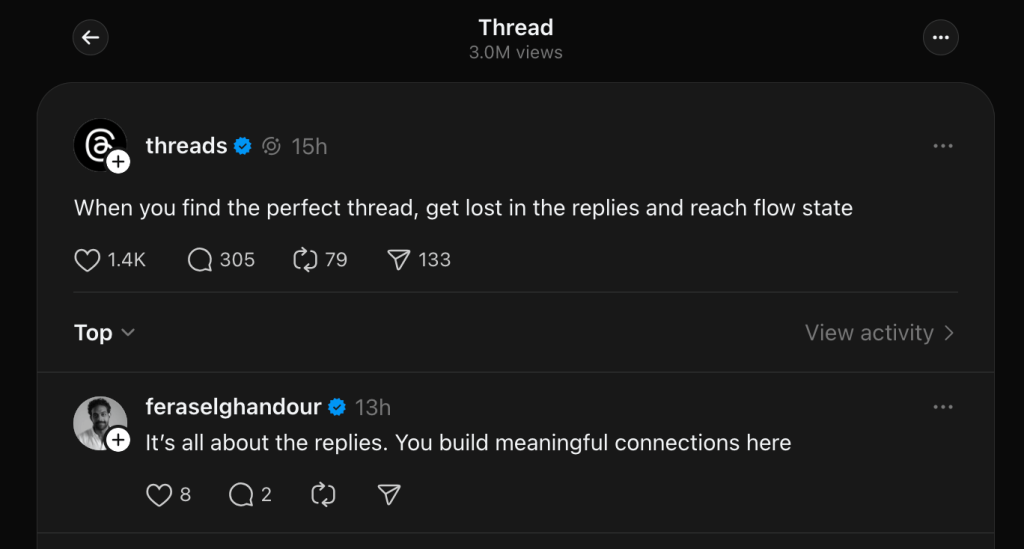

That means the two platforms are not just different sizes of the same audience. A lifestyle brand with an Instagram following will find its people already on Threads. A crypto or breaking-news account will not.
Engagement
Threads is widely reported to have higher engagement rates than Twitter, with third-party estimates commonly landing between 3% and 6% for Threads against well under 1% for Twitter on large accounts. These figures come from marketing-industry samples rather than platform disclosures, and they vary a lot by account size and niche, so treat them as directional.
The mechanism behind the gap is easier to verify than the numbers. Threads weights replies and ongoing conversation heavily in its ranking, and mixes algorithmic recommendations in with accounts you follow, so a post from a small account can reach beyond its followers. Twitter rewards speed and volume, and reach concentrates around accounts that already have it.
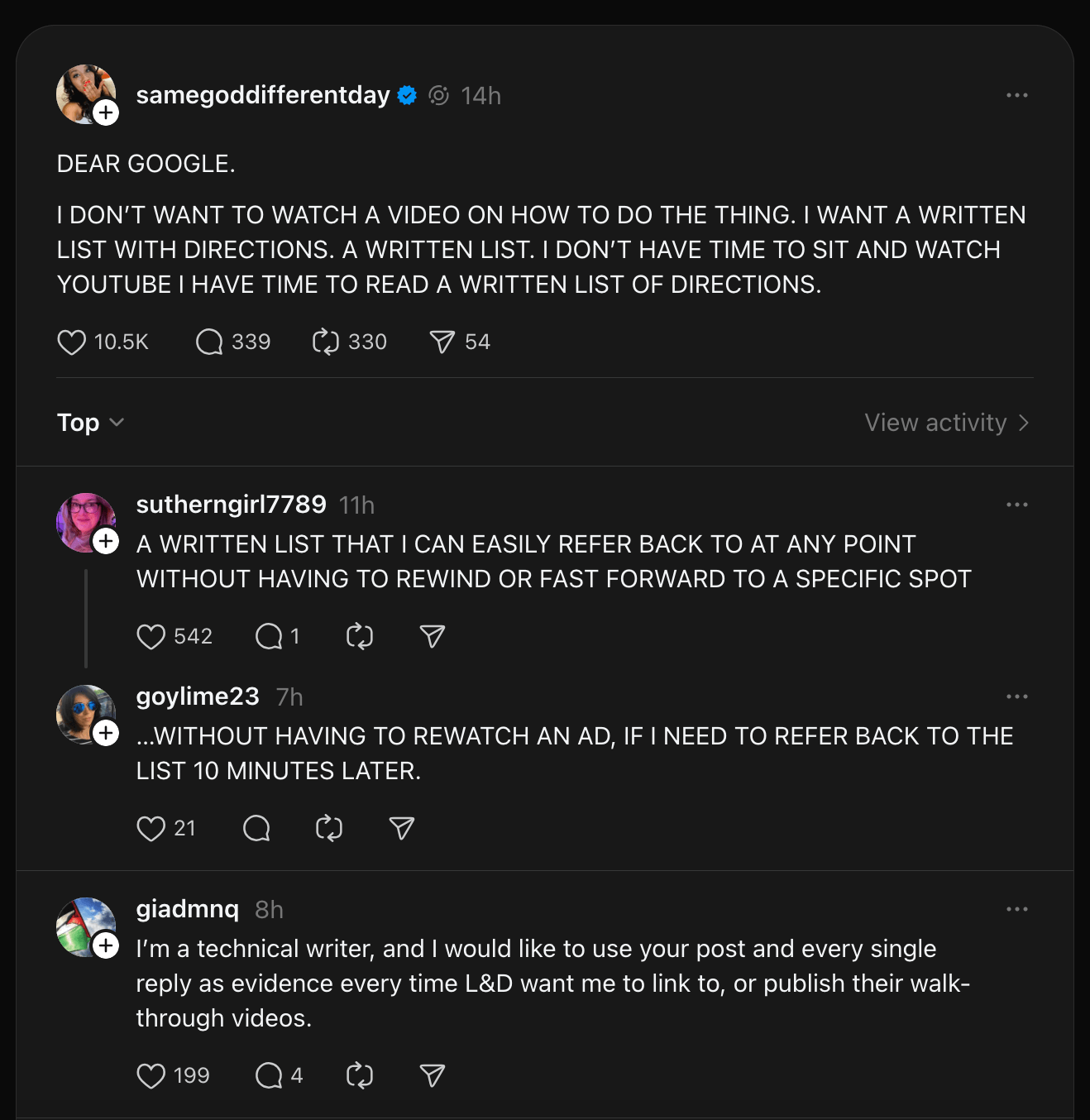
Whether that translates to your account is worth measuring rather than assuming. Engagement rate on a 500-follower account and a 500,000-follower account are not comparable, and industry averages hide most of the variance.
Features Twitter has that Threads doesn’t
- Trending topics. Twitter surfaces what’s spiking in real time. Threads has Topics, which organize posts but don’t rank by velocity.
- Search operators. Twitter supports full-text search with date, account, engagement, and boolean filters. Threads search is comparatively basic.
- Multiple hashtags. Twitter allows as many as you want; Threads allows one per post.
- 4K image viewing. Twitter displays images at higher resolution.
Features Threads has that Twitter doesn’t
- 500 characters on the free tier. Twitter requires Premium to exceed 280.
- Instagram Stories sharing. One tap turns a Threads post into a Story, which X can’t do to any Meta surface.
- Multi-word hashtags. Threads hashtags can contain spaces.
- A following that arrives pre-built. If you have an Instagram audience, Threads starts you with it rather than from zero.
Communities on both platforms
Both platforms have communities now, and this is the one area where the direction of travel favours Threads.
X Communities are larger and more established — topic-based group feeds you can post directly into. But Twitter has announced that Communities will be shut down. They’re still running at the time of writing, despite the original shutdown date of May 30, 2026.
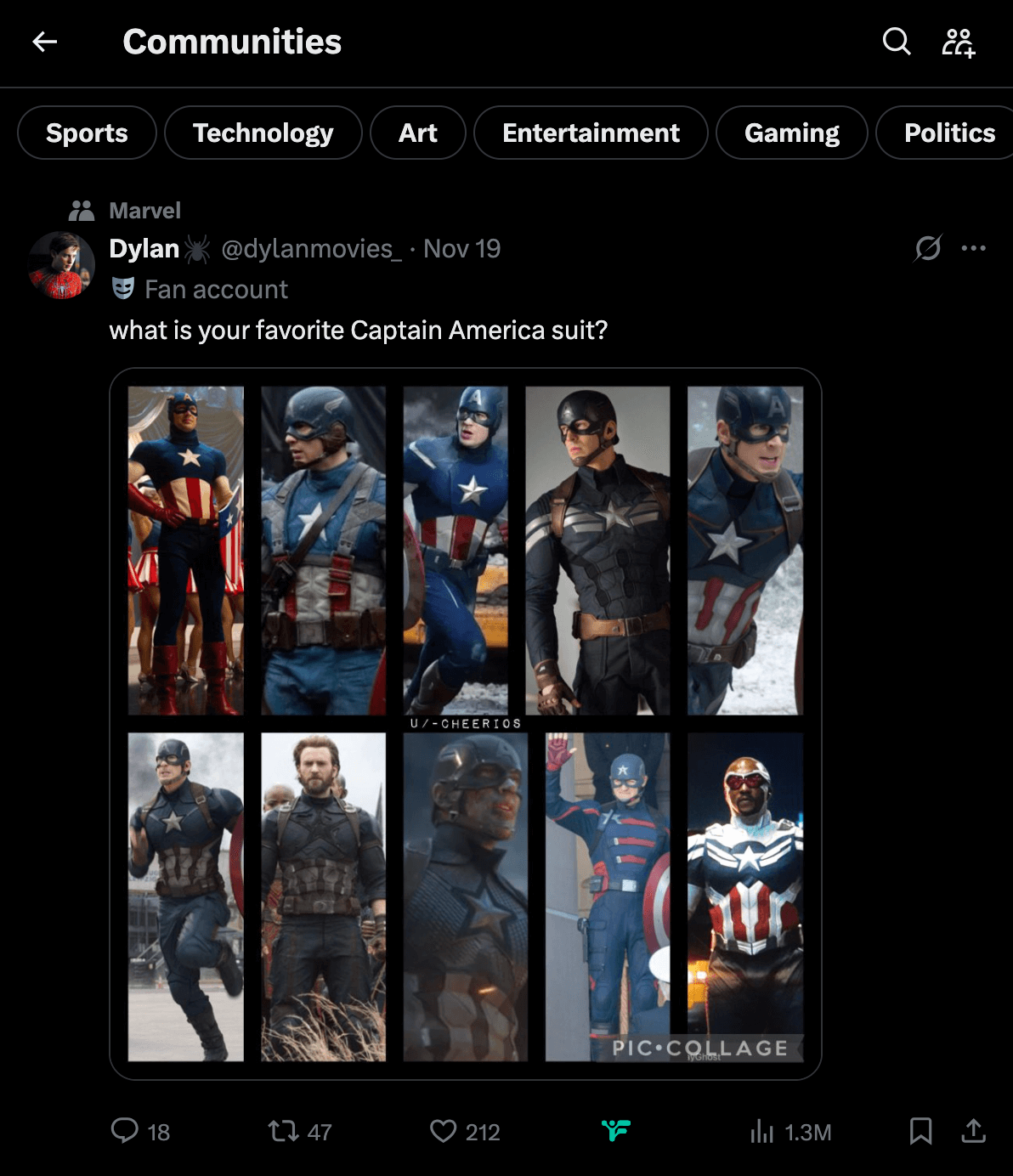
Threads communities are newer and there are far fewer of them, but you can join one and post into it the same way. If you’re building a strategy around community posting, that asymmetry is worth planning for.
Advertising
Both platforms accept ads, but through different systems. Threads ads run through Meta Ads Manager, alongside Instagram and Facebook campaigns, which means shared targeting and shared reporting if you already advertise on Meta.
X (Twitter) sells its own inventory directly — video ads, carousels, and takeover placements — with its own targeting and its own dashboard.
For an advertiser already spending on Meta, Threads is a smaller decision: it’s another placement rather than another platform.
Which platform suits which industry?
Tech, news, finance, and crypto accounts still perform better on Twitter. The audience is there, the content is time-sensitive, and search and trending topics matter for monitoring the conversation.
Lifestyle brands, creators, and anyone with an existing Instagram audience tend to do better on Threads. The follower base transfers, the tone rewards conversation over speed, and the Stories integration compounds reach across two Meta surfaces.
Journalists, researchers, and sports accounts sit in between and often maintain both — Twitter for breaking news and reach, Threads for discussion that lasts longer than an hour.
Which one should you use?
X (Twitter), if your content is time-sensitive, your audience follows news or markets, or you rely on search to monitor mentions and conversations.
Threads, if you already have an Instagram audience, your content is conversational rather than reactive, or you advertise through Meta already.
Both, if you’re running a brand account. The audiences barely overlap, the content adapts between them with small edits, and the cost of a second platform is mostly workflow rather than content.
The best posting strategy across both
Posting identical content to both platforms underperforms, but writing separately for each doubles the work for no real gain. The middle path is one message, adjusted.
Write for the longer limit first. A 450-character Threads post trims to 280 for X more cleanly than a 280-character post expands. Adjust the hashtags — one multi-word tag on Threads, several single-word tags on Twitter. Then check which platform the post actually landed on, and let that shape the next one rather than assuming.
Running both without doubling the work
The practical objection to using both platforms is time, not strategy. Composing twice, scheduling twice, and checking two analytics dashboards is roughly double the work for content that’s 90% the same.
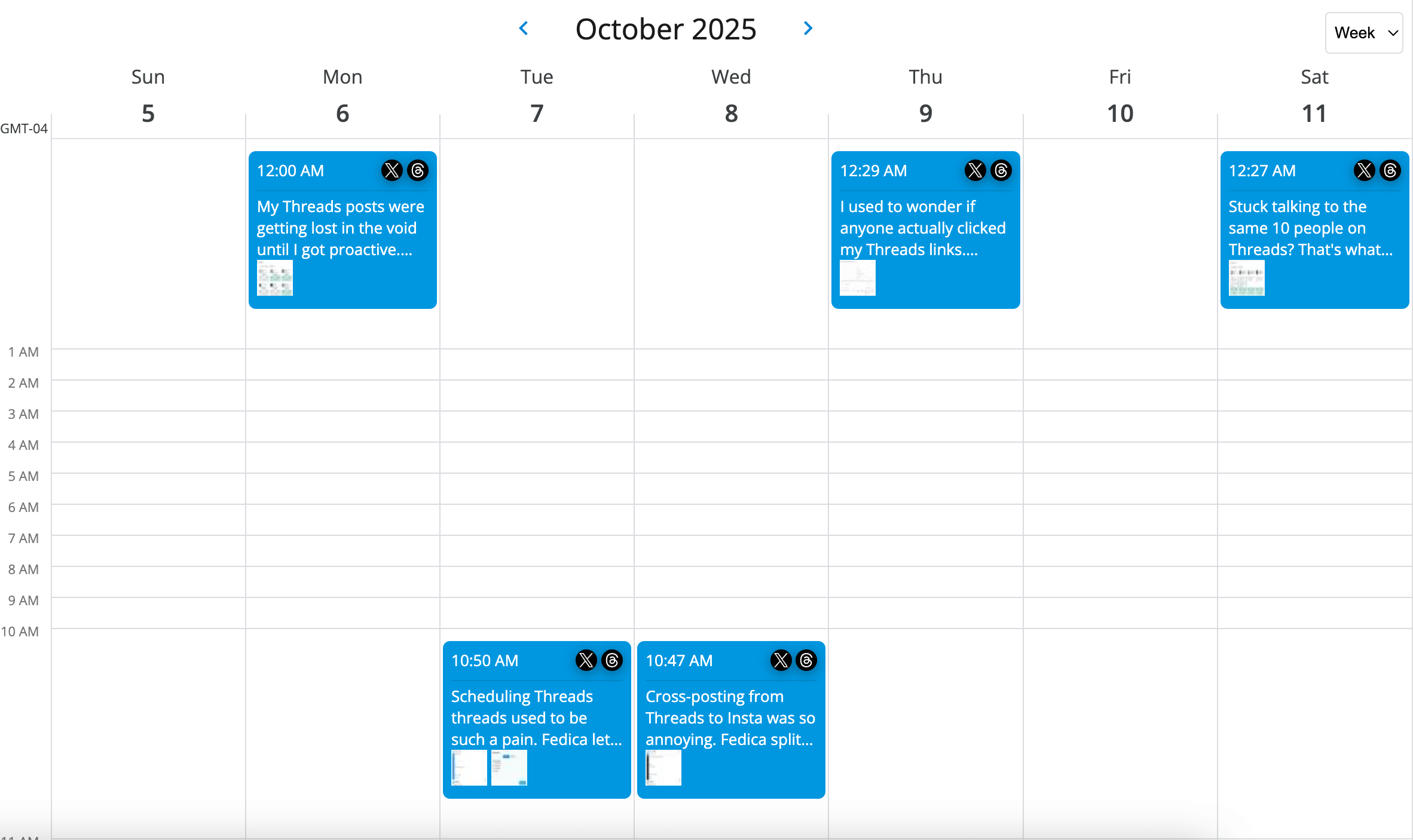
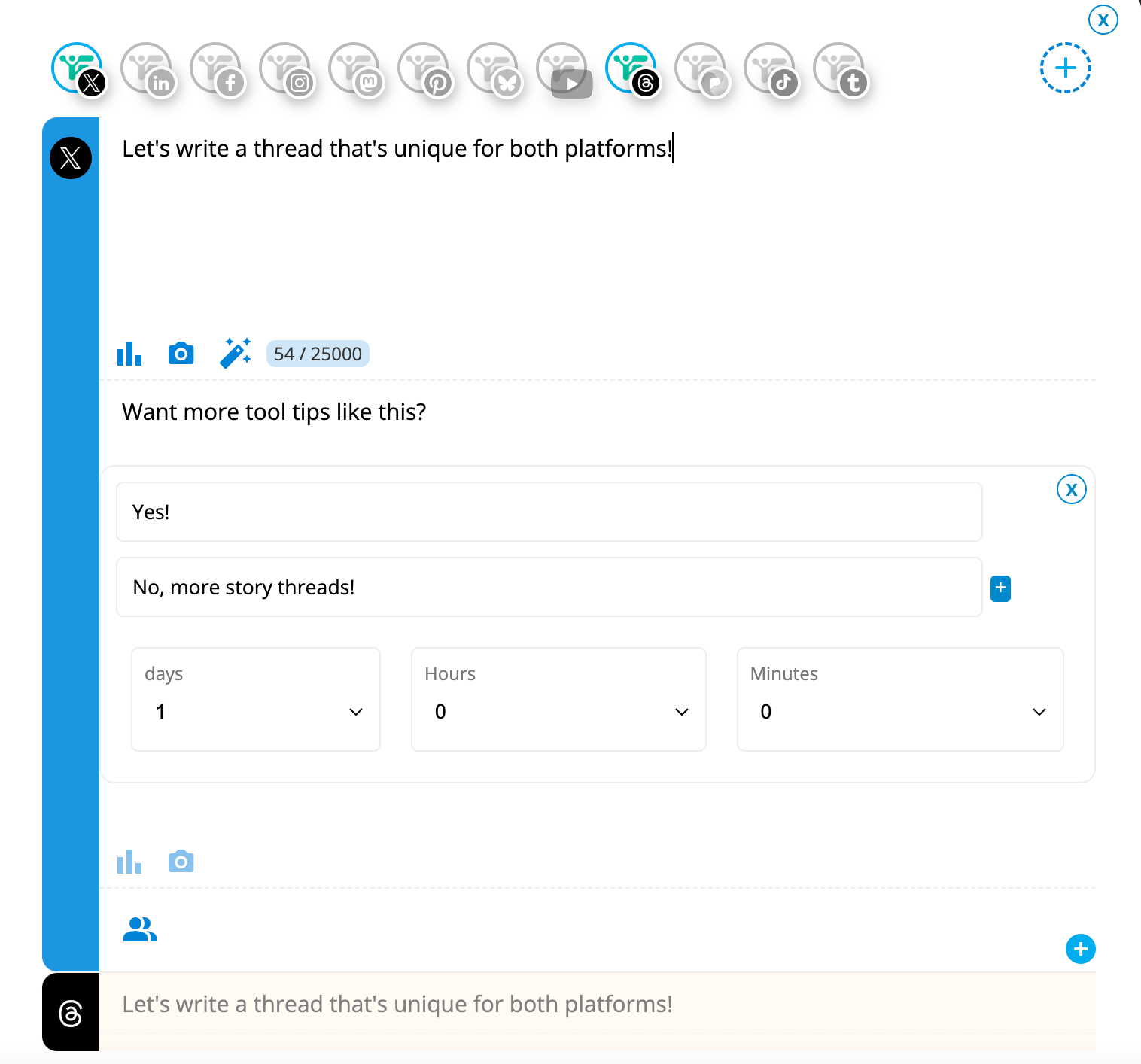
Fedica handles both from one composer: write once, adjust per platform, and schedule to Threads and X(Twitter) together — including threads, polls, and image carousels, with Threads Topics and X Communities targeting. It also cross-posts to Bluesky, Mastodon, LinkedIn, Facebook, Instagram, and others from the same queue.
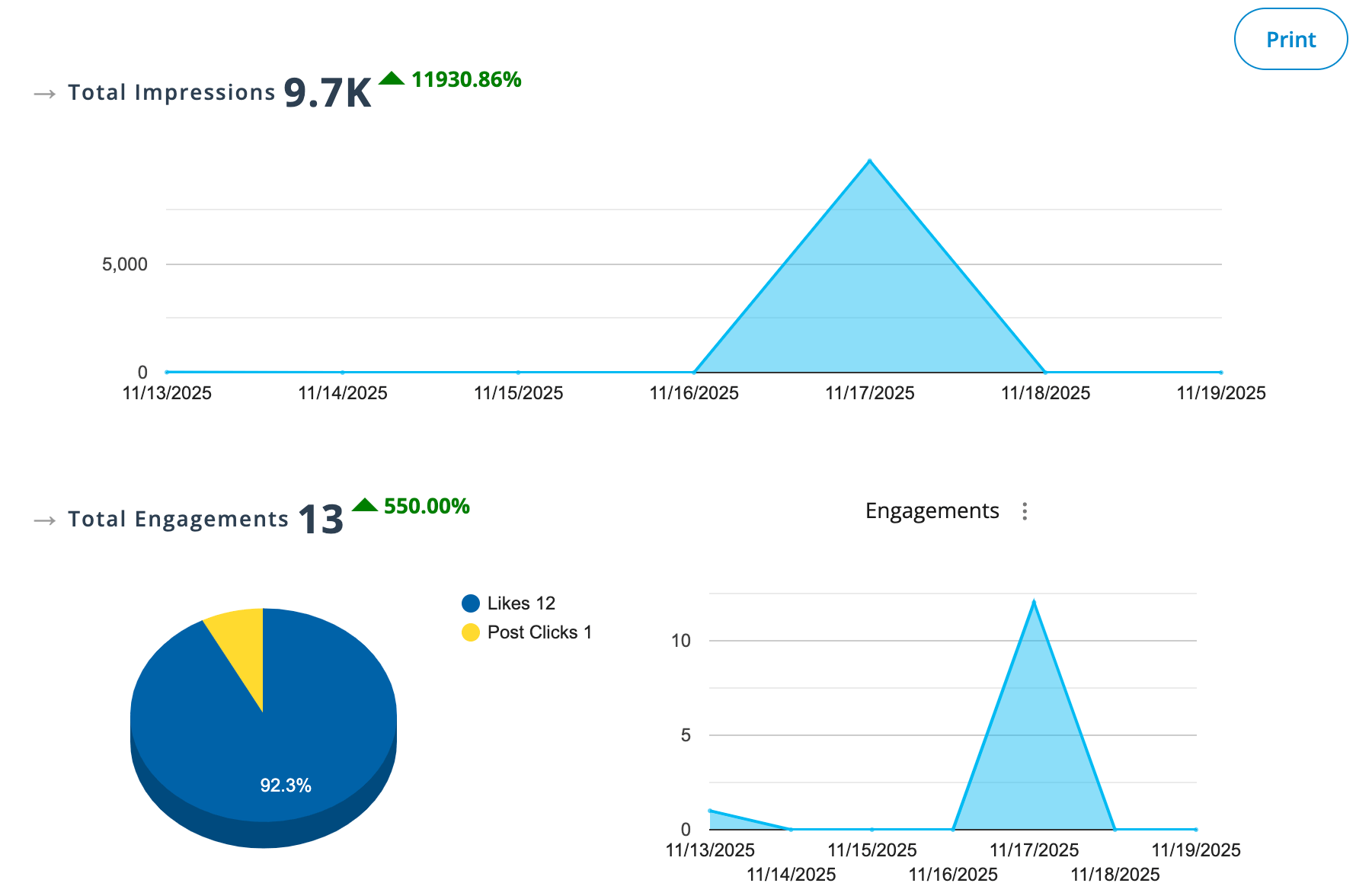
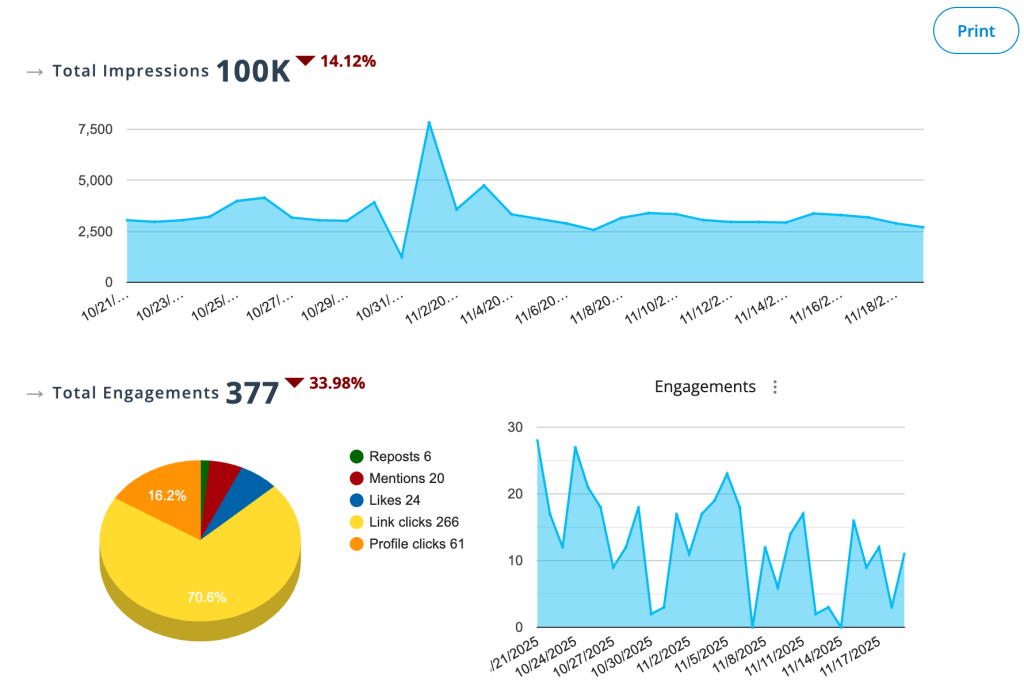
Analytics for both sit in the same dashboard, so you can compare which platform is actually performing for your content rather than relying on industry averages. Fedica has X analytics and Threads analytics side by side, with follower demographics, best-posting-time data, and engagement broken down by pipeline.
Conclusion
Threads and Twitter are converging on features — Threads has added DMs and communities, X (Twitter) has added long-form posts — but they still reach different people. Twitter holds real-time and news; Threads holds the Instagram audience and rewards conversation.
For most brands the answer isn’t which one, it’s whether running both is worth the extra work. With a shared composer and shared analytics, it usually is.
Frequently Asked Questions
Is Threads replacing Twitter?
Not on current numbers. Threads has passed 500 million monthly active users and is growing faster, but Twitter still leads on daily activity at 250 million and holds the real-time news use case. The two are converging on features rather than one displacing the other. Threads has also moved toward decentralisation with federated fundamentals, though it retains heavy algorithmic control over feed curation — which is part of why some users have moved to Bluesky and Mastodon instead of either.
What features does Twitter have that Threads doesn’t?
Trending topics, full-text search with operators, multiple hashtags per post, and 4K image viewing. Threads has closed several gaps recently — it now has direct messages and communities — so the list is shorter than it was.
Can you schedule posts on Threads vs Twitter?
Both support scheduling. Twitter has in-app and web scheduling; Threads added it for all users more recently. Third-party tools schedule to either, or to both at once.
What’s the character limit on Threads vs Twitter?
Threads allows 500 characters. Twitter allows 280 on the free tier, or up to 25,000 with Premium. Both truncate at roughly 280 in the feed, so the extra length is behind a tap either way.
Can you use hashtags on Threads like Twitter?
Threads allows one hashtag per post, and it can contain spaces. Twitter allows multiple hashtags but they can’t contain spaces, and Twitter supports following and trending hashtags, which Threads doesn’t.
Where do I get more followers: Twitter or Threads?
It depends what you post. Threads weights replies and discussion, so conversational content can reach beyond your followers. Twitter has more daily users and rewards speed and volume. If you already have an Instagram audience, Threads starts you further ahead.
Who uses Threads vs Twitter?
Threads users largely arrive from Instagram, so the audience skews toward lifestyle, creators, and visual brands, with a generally calmer tone. Twitter skews toward news, politics, tech, finance, and real-time reaction. A crypto account will do better on Twitter; a lifestyle brand usually does better on Threads.
Which platform is better for my industry?
Tech, news, and finance lean Twitter. Lifestyle, creators, and Instagram-native brands lean Threads. Advertising is a separate consideration: if you already run Meta campaigns, Threads is another placement rather than a new platform.
Where is my target audience: Twitter or Threads?
Worth testing rather than assuming. Run the same content on both for a few weeks and compare engagement per follower, not raw numbers — the platforms are different sizes and the absolute figures won’t tell you much.
Should I post the same content on both platforms?
Not identically. The same message with platform adjustments keeps your voice consistent while respecting that people read differently on each. Straight duplication tends to underperform on both.
What content works on Threads vs Twitter?
Twitter rewards fast, information-dense posts and reaction to what’s happening now. Threads rewards conversation — posts that invite replies, and short-form video. Threads supports links, photos, and video up to five minutes.
Can I cross-post from Twitter to Threads?
Yes, with a tool that supports both. The useful version isn’t duplication — it’s writing once and adjusting each version for the platform before it publishes.
How do I schedule posts for Twitter and Threads?
In Fedica, connect both accounts, compose in the shared composer, and set the date and time. For Twitter threads, write the first post and add subsequent ones, then publish the thread at once or spread it over a set period. The same post can go to Bluesky, Mastodon, or LinkedIn from the same interface.
Should I use different content for each platform?
Different enough to fit the format, not different enough to fragment your voice. Adjusting length, hashtags, and phrasing is usually sufficient.
How do I set up Threads if I have Twitter?
You need an Instagram or Facebook account. Create one if you don’t have it, then install Threads and log in with that account. Your Threads and Twitter accounts remain entirely separate.
Can I link my Twitter account to Threads?
Threads has no native way to link an Twitter account. You can share a Threads post to Twitter manually through the share menu. Third-party tools can connect both accounts for cross-posting.
Do I need a separate account for Threads?
You need an Instagram or Facebook profile to create a Threads profile — one Threads profile per Instagram or Facebook account. Some EU users can now sign up without one. Your Threads account is separate from your Twitter account.
How do I migrate from Twitter to Threads?
Most people don’t migrate fully — they add Threads and keep Twitter, because the audiences differ. If you do want to move, post consistently on Threads for a few months before letting the Twitter account go quiet, and tell your Twitter followers where you’ve gone.
Can I use the same tools for Twitter and Threads?
Yes. Fedica connects both, schedules to either or both, and reports on both in one dashboard, alongside Bluesky, Mastodon, LinkedIn, and others.
How do I track analytics for both platforms?
Fedica consolidates both in one dashboard — engagement, audience demographics, best posting times, and follower maps down to city level, so you can compare the two platforms directly rather than switching between apps.
Is Threads growing faster than Twitter?
Yes, by monthly users. Threads launched in 2023 and reached 100 million sign-ups in its first week, helped by Instagram accounts being one click away, and has since passed 500 million monthly active users. Twitter’s growth is flat by comparison, though it still leads on daily activity.