
Loomly alternative choices are easiest when you compare how fast each option helps you publish where your audience actually is, from X to Bluesky, Threads, and the open social web.
In real platform reviews, teams win faster when they stop switching tools. This comparison is for teams that treat X as a core channel and also want room to grow on emerging and high-traffic networks without a second stack. You will see where Fedica is the better fit, where Loomly still works well, and how to switch with low risk.
Key Takeaways
- Choose a Loomly alternative based on where you publish today and where you want to grow next, not only a feature matrix.
- Fedica supports the major networks teams already rely on, plus high-growth and open platforms such as Bluesky, Threads, Mastodon, Pixelfed, and PeerTube, so you are not boxed into one channel.
- If X is core to revenue or community, Fedica still gives a strong publish-analyze-listen-segment loop, with depth that is hard to match in a calendar-first tool.
- Use channel support as a practical filter early: Loomly’s public integrations list does not include X in its social channel section, which matters if X is part of your mix.
- A 30-day side-by-side test with clear KPIs gives the strongest basis for a Loomly alternative decision.
Table of Contents
- What Is the Best Loomly Alternative for Teams on X Plus Emerging Platforms?
- How Do You Choose a Better Loomly Alternative?
- Fedica vs Loomly. Which Alternative Is Better for X and a Multi-Network Stack?
- Bluesky, Threads, Mastodon, Pixelfed, and PeerTube: Why This Matters in a Loomly Alternative
- How Is Fedica Better Than Loomly for Publishing on X and Beyond?
- How Does Fedica Compare to Loomly for Analytics When X Is Central?
- How Does This Loomly Alternative Help with X Listening and Research?
- When Is Loomly Still the Better Choice?
- What Are the Best Loomly Alternatives by Use Case?
- How to Migrate to a New Loomly Alternative Without Chaos
- How Do You Make the Final Loomly Alternative Decision?
What Is the Best Loomly Alternative for Teams on X Plus Emerging Platforms?
The best Loomly alternative for that mix is usually Fedica because it ties serious X workflow depth to real multi-network publishing, including Bluesky, Threads, Mastodon, Pixelfed, and PeerTube alongside the mainstream networks teams already use. You get faster decisions because your team does not need one tool for the calendar, another for X, and another experiment stack for open social. Loomly can still fit collaboration-heavy teams, but it is less suited when X depth and emerging-platform coverage both matter. This Loomly alternative gives you clearer execution and iteration across the networks you care about.
That is the main difference teams care about right now. Loomly is good for planning and approvals across its supported list. Fedica is better when your roadmap includes X plus platforms where audiences are moving fast, and you want one place to plan, publish, and learn.
Watch Fedica in a Nutshell:
How Do You Choose a Better Loomly Alternative?
Use a better Loomly alternative when you need faster execution, clearer reporting, and real coverage of both legacy majors and newer networks in one workflow. Start by defining four decision: network fit (including X and any emerging channels you want), publish speed, Twitter analytics clarity, and how quickly insight becomes the next post. Then compare tools against those criteria using the same campaign goals and timeline. This Loomly alternative approach gives you an outcome-based decision instead of a feature checklist.
- Network fit: does the tool cover X, your mainstream stack, and Bluesky, Threads, Mastodon, Pixelfed, or PeerTube if those are on your roadmap?
- Publish speed: how fast your team can plan and post.
- Analytics clarity: how quickly you can read results.
- Iteration speed: how fast insight becomes the next post.
Keep your evaluation practical by scoring each option on time saved, content quality, and iteration speed after each campaign cycle. The best Loomly alternative is the one that improves daily decisions while reducing manual handoffs between planning, publishing, and analysis.
Fedica vs Loomly. Which Alternative Is Better for X and a Multi-Network Stack?
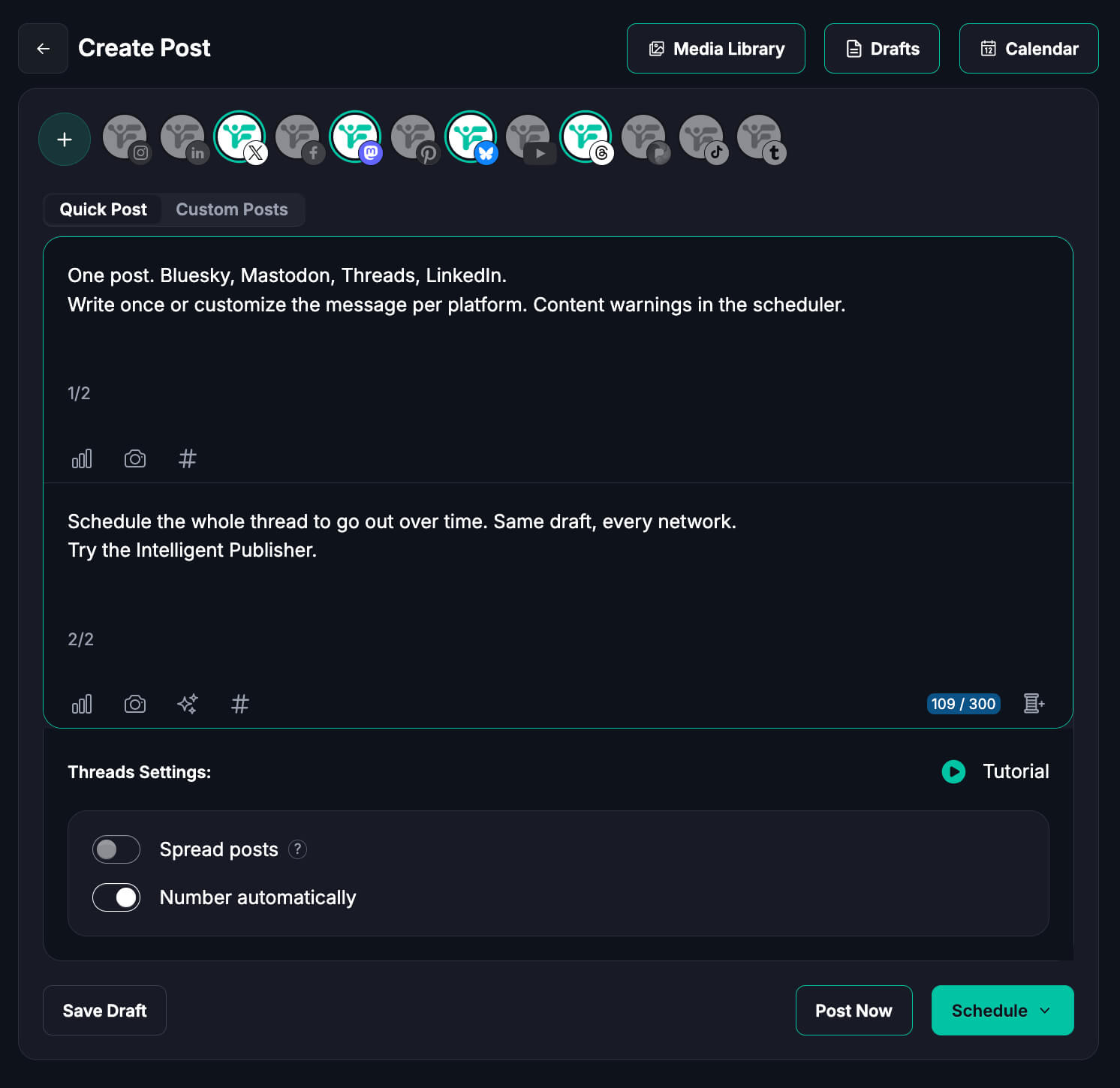
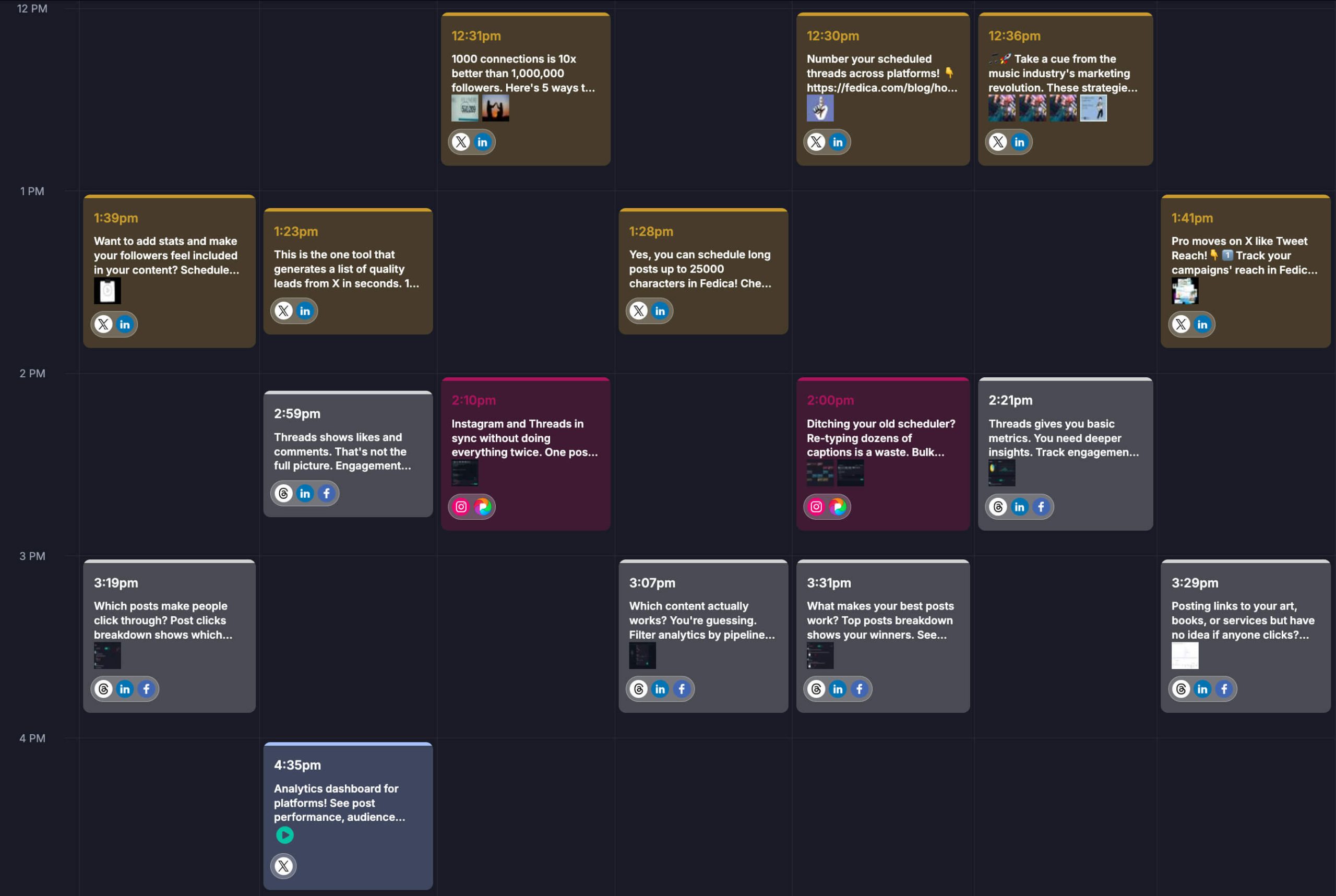
This Loomly alternative comparison is simple: Loomly is stronger for post planning teamwork tools, while Fedica is stronger when X depth matters and you also want emerging and open social in the same stack. Fedica supports the mainstream networks teams expect, plus Bluesky, Threads, Mastodon, Pixelfed, and PeerTube, so you can test growth bets without bolting on extra tools. For X specifically, Fedica supports thread scheduling, poll scheduling, reply and repost scheduling, and best-time style optimization. The better Loomly alternative is the one that shortens the path from insight to action on the networks you actually publish to.
On Loomly’s public integrations page, listed channels include Instagram, LinkedIn, Facebook, TikTok, YouTube, Threads, Google Business Profile, Pinterest, and Snapchat. X is not listed in that section, which matters if your strategy depends on X posting and analysis. Fedica is built for teams that lead on X and still need a serious calendar for everything else, including Bluesky and the Fediverse. That channel support check often decides a Loomly alternative review.
- Best fit for process-heavy planning: Loomly
- Best fit for X depth plus emerging and open social in one workflow: Fedica
- Best fit when you need one workflow for publish + insight + listening: Fedica
So this is really a workflow and network-mix choice, not a feature-count choice. If X and high-growth platforms are part of how you grow, Fedica usually gives your team more day-to-day leverage.
Bluesky, Threads, Mastodon, Pixelfed, and PeerTube: Why This Matters in a Loomly Alternative
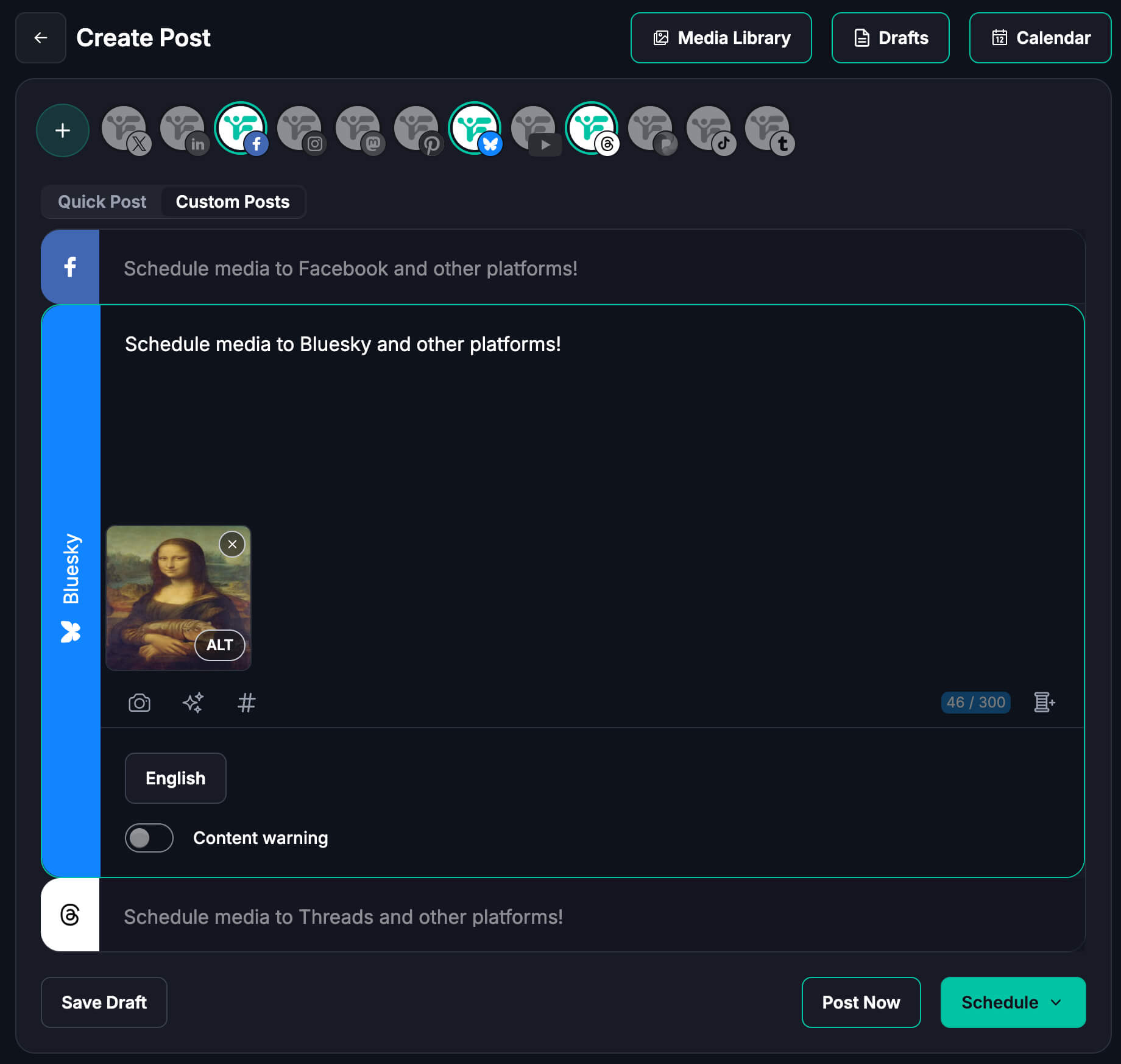
Many teams are no longer betting on a single feed. Bluesky and Threads are where a lot of attention is moving, Mastodon and Pixelfed anchor community and visual culture on the Fediverse, and PeerTube matters when video and open distribution are part of the plan. A calendar-first Loomly alternative can feel limiting if your roadmap includes those networks and you still want one operational home.
Fedica is positioned so you can keep your mainstream publishing habits while you grow on these channels in parallel, instead of treating them as side projects in separate apps. That is the practical reason teams compare Fedica to Loomly when they care about both reach today and optionality tomorrow.
How Is Fedica Better Than Loomly for Publishing on X and Beyond?
Fedica is a better Loomly alternative for publishing because it goes beyond basic scheduling into campaign-ready execution on X, including threads, polls, replies, reposts, and bulk uploads, plus browser and RSS automation workflows where they apply. Your team can publish consistently across the networks Fedica supports without losing control over timing and format. When your stack includes Bluesky, Threads, Mastodon, Pixelfed, or PeerTube, you are not forced to fragment that work across extra point tools.
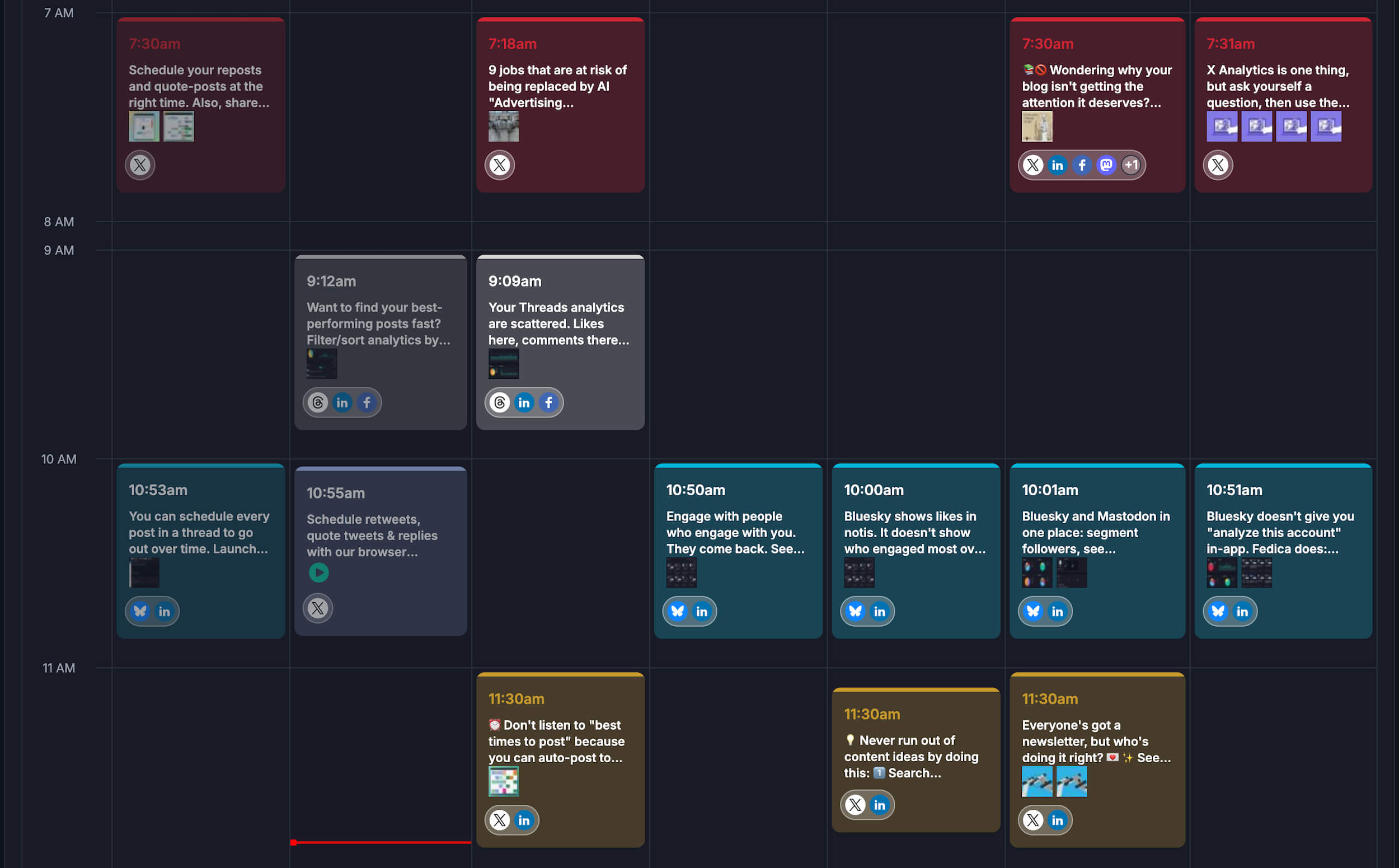
On X and other supported networks, audience-activity timing helps you post when people are actually online. You can review results and adjust without constantly switching context. That makes daily publishing more repeatable and less manual. In practice, this Loomly alternative helps teams stay consistent while moving faster.
How Does Fedica Compare to Loomly for Analytics When X Is Central?
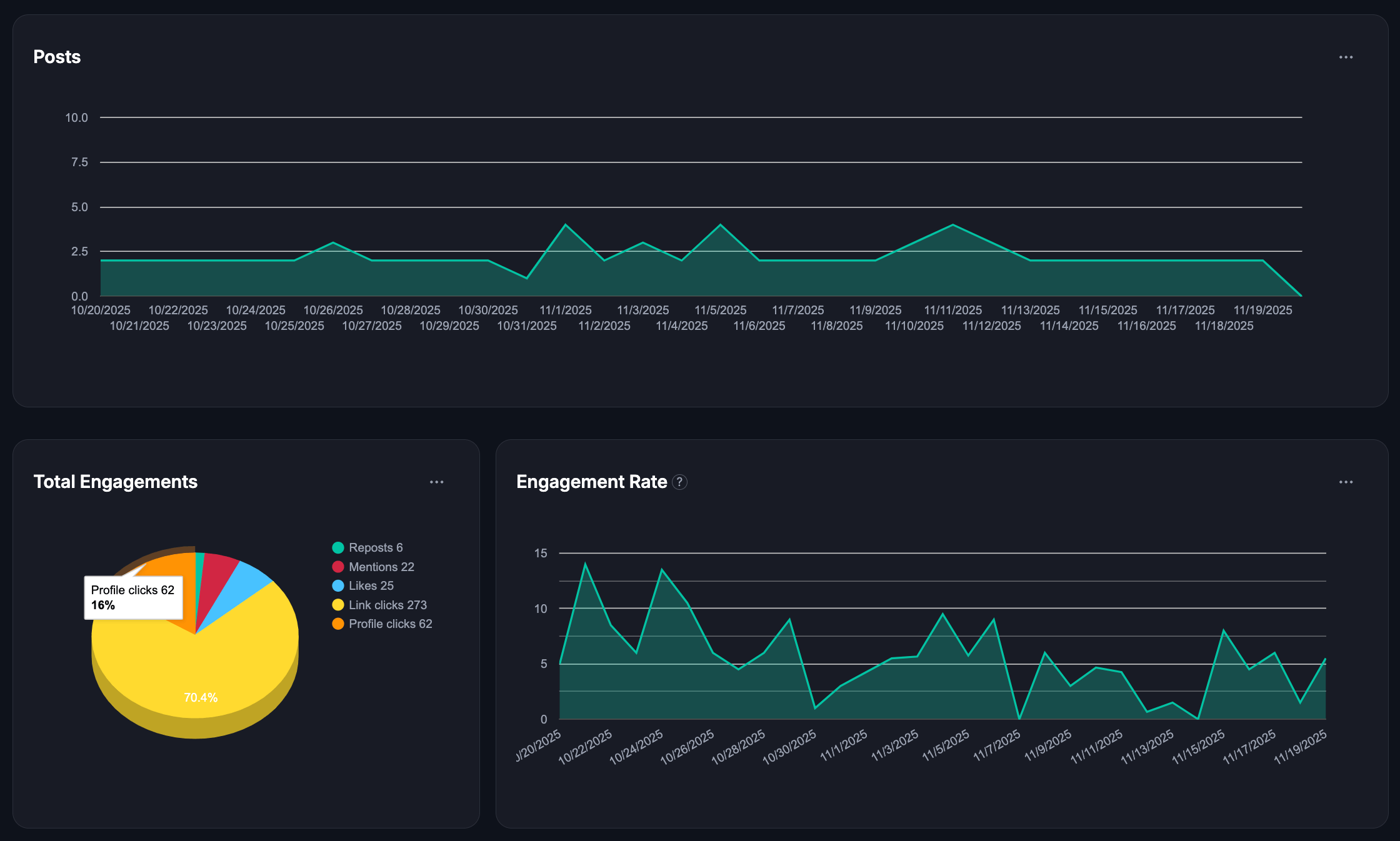
Fedica is a strong Loomly alternative for analytics because it connects post performance and audience behavior in one place on the networks where Fedica exposes that depth, with especially strong tooling around X. You can review engagement trends, follower movement, and segment-ready insight signals without rebuilding reports manually. That gives teams faster answers on what to repeat, what to stop, and who to target next. For teams that still publish across mainstream and emerging channels, having scheduling and core analytics in one stack beats bouncing between silos.
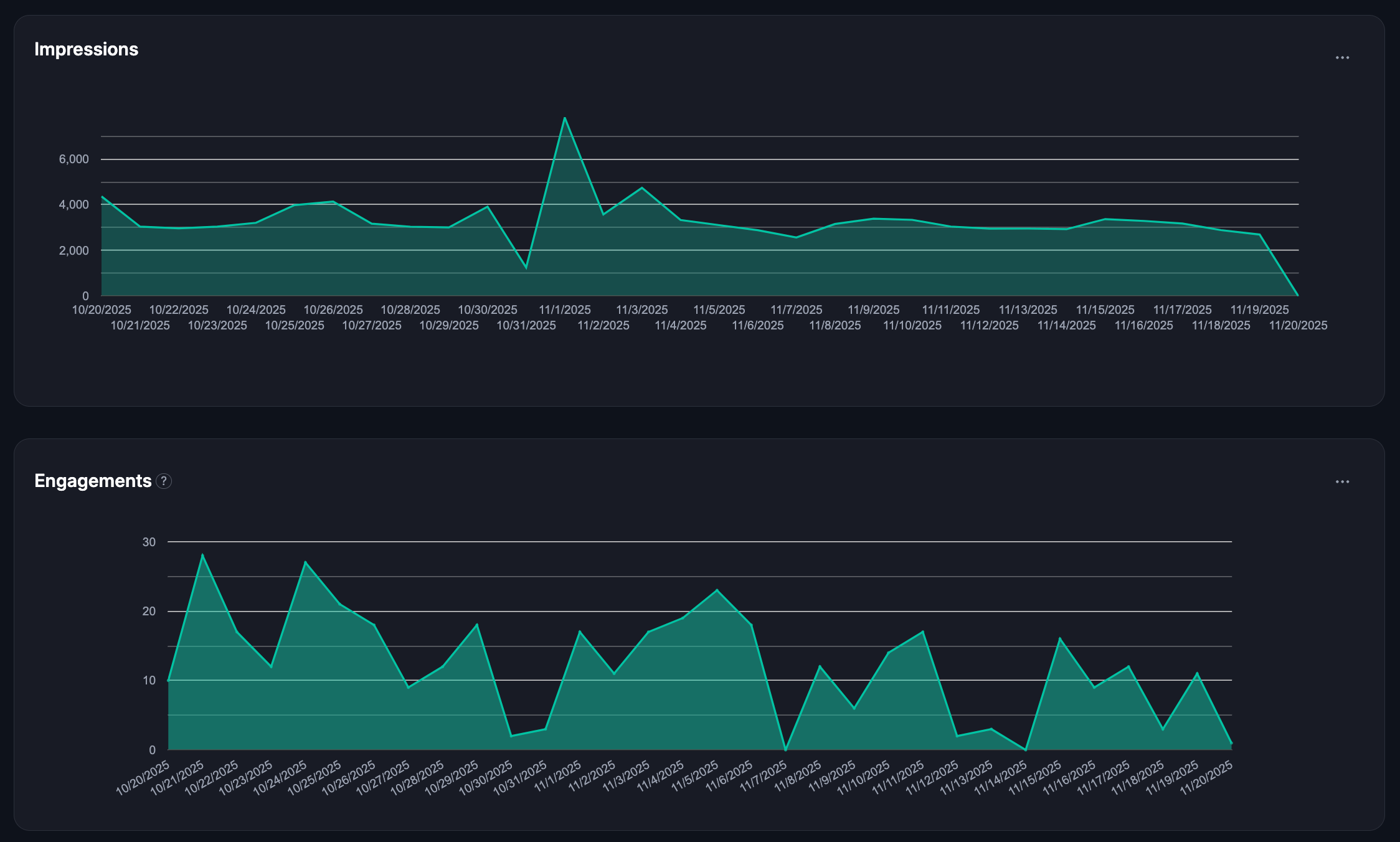
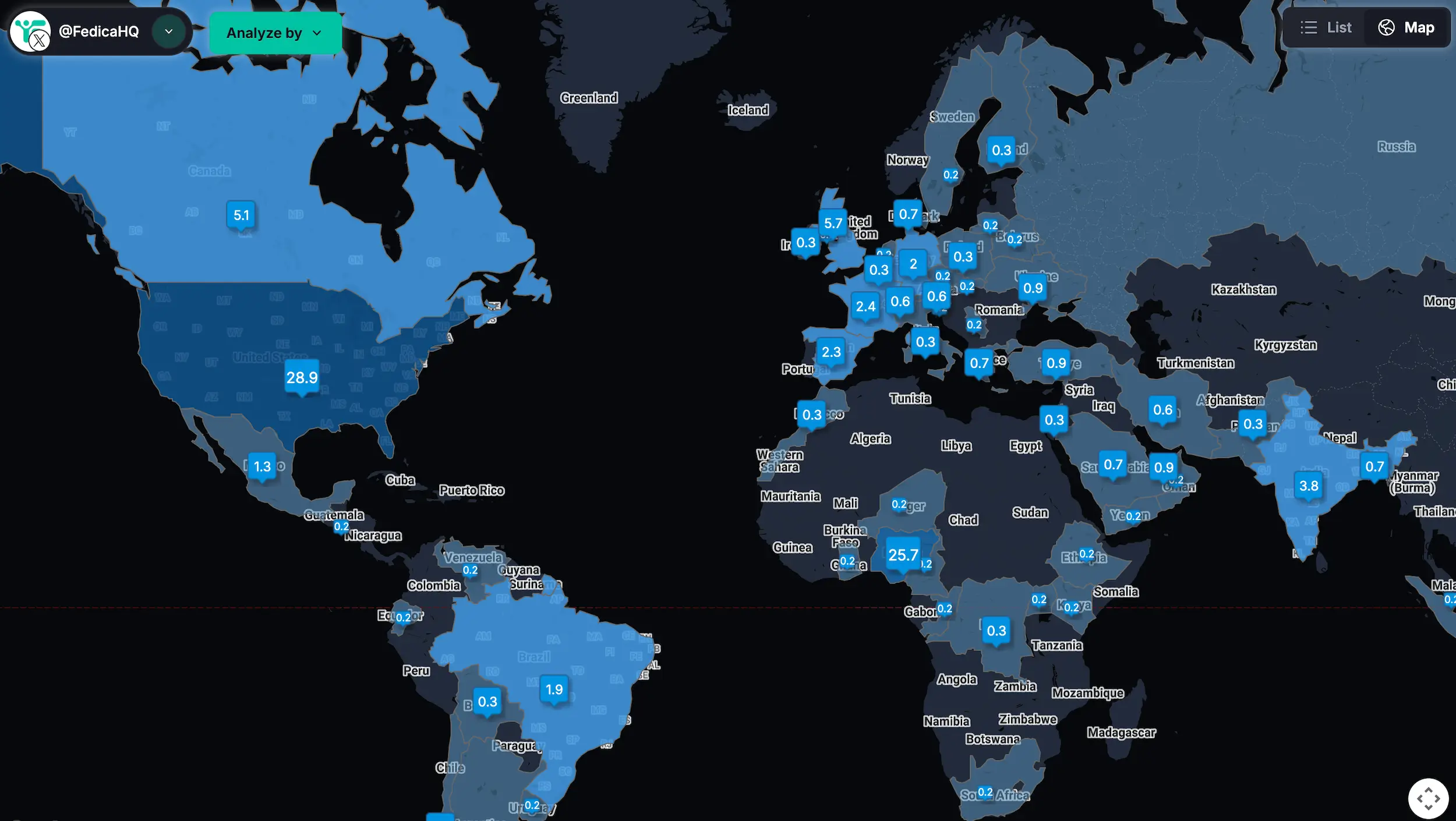
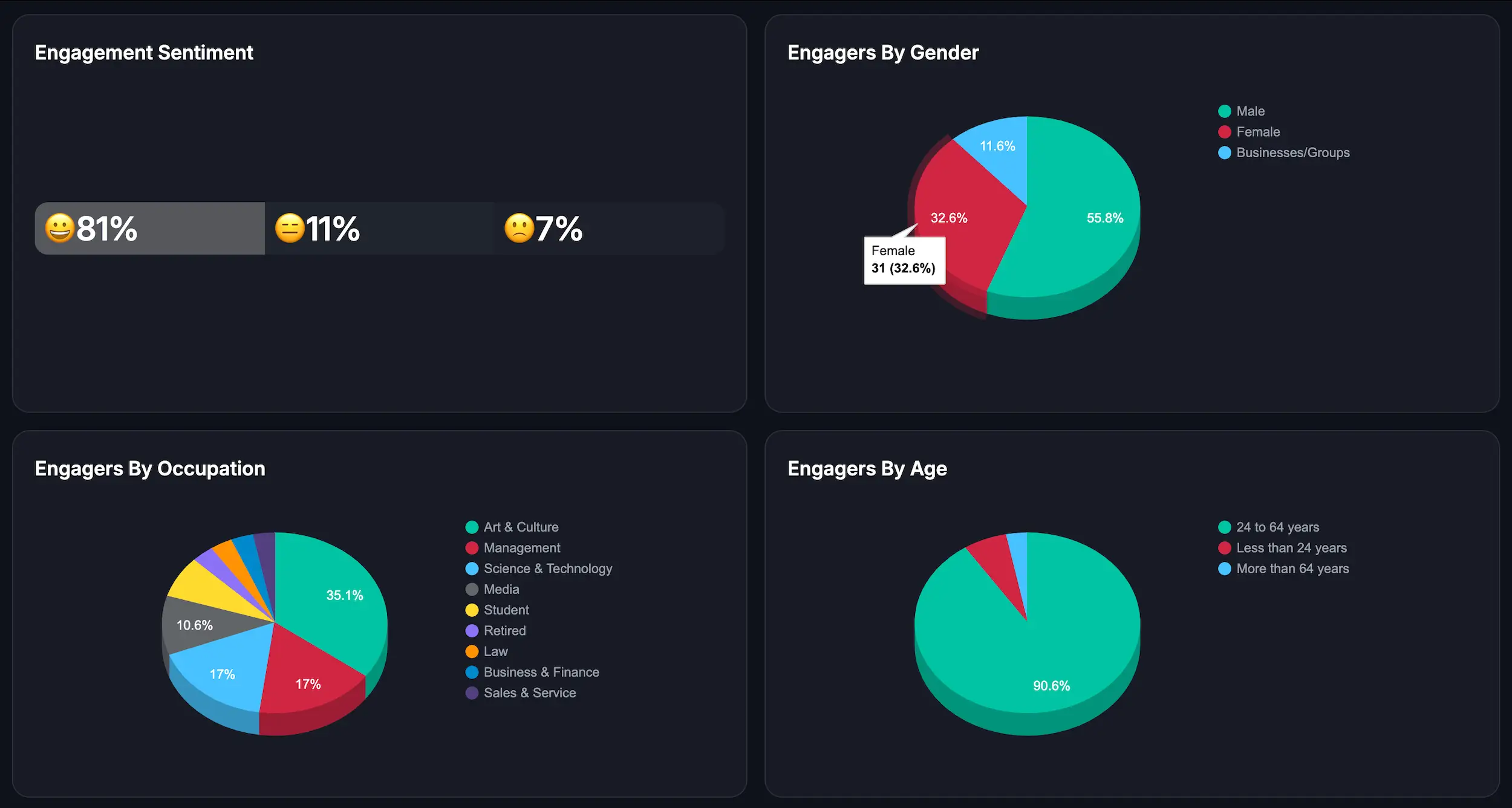
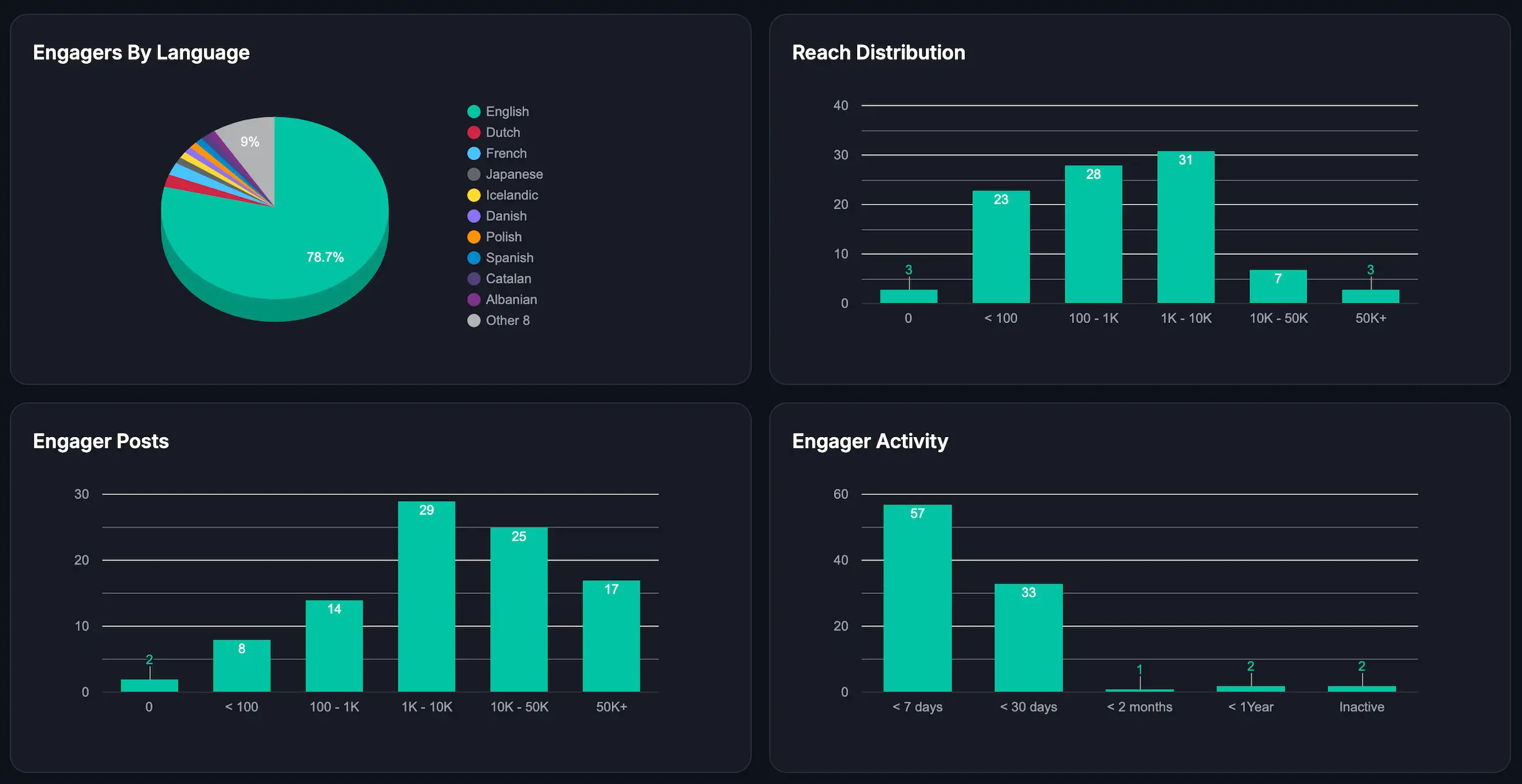
On X you can track daily followers and unfollowers, growth trends, engagement, and demographics down to city-level mapping. Internal feature mapping shows 46 of 48 named capabilities are X-enabled across publishing, analytics, listening, and management. That depth is a big reason Fedica wins Loomly alternative comparisons when X is the hub for measurement and deep audience insights, even if you also post to Bluesky, Threads, or the elsewhere.
How Does This Loomly Alternative Help with X Listening and Research?
This Loomly alternative helps with listening and research by unifying keyword, hashtag, and account-level analysis with publishing workflows, with especially rich coverage on X. Your team can validate campaign ideas before posting and then refine quickly after results appear. That shortens strategy cycles and reduces uncertainty across planning, execution, and optimization. When you also publish to Bluesky, Threads, or Fediverse apps, you still benefit from one calendar and fewer handoffs back to your X-native research loop.
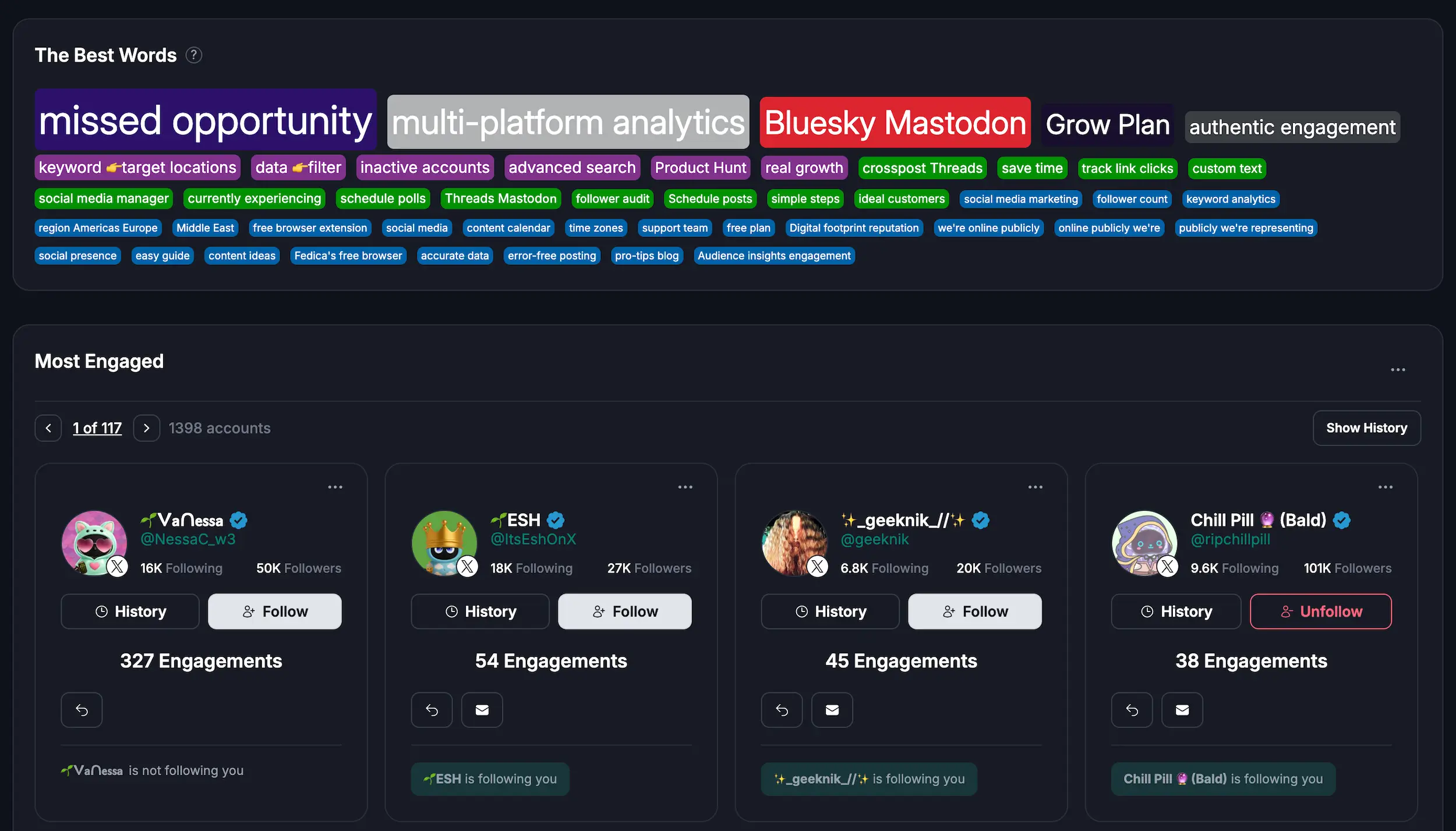
Fedica includes historical hashtag analysis, real-time alerts, timeline analysis, account analysis, list analysis, and common-follower discovery for the workflows where those apply. Those features help you plan campaigns with better evidence before you post. Because listening and scheduling are connected on supported networks, your team spends less time stitching data from different tools. This is where a strong Loomly alternative can produce clearer gains.
When Is Loomly Still the Better Choice?
Loomly is still a good choice when your top priority is approvals and calendar planning. In that scenario, you may not need deeper X analytics or listening in the same platform yet. A Loomly alternative becomes more valuable when growth depends on tighter publish-to-insight loops. Match tool depth to your real operating model, not a generic feature list.
Use this simple filter: if your team mainly needs calendars and approvals across Loomly’s supported list and you are not leaning on X or open social yet, Loomly can still be the right fit. If your team needs X research, segmentation, and optimization in one stack, plus room for Bluesky, Threads, Mastodon, Pixelfed, or PeerTube, choose a Loomly alternative built for that depth and breadth.
What Are the Best Loomly Alternatives by Use Case?
The best Loomly alternative depends on your use case, not listicle rankings. Teams that treat X as the growth and learning hub usually need tighter publishing and analytics integration, and that is where Fedica stands out. Teams betting on Bluesky, Threads, or the Fediverse also need a stack that actually schedules there, not just a slide in a sales deck. Collaboration-heavy teams may care more about approval flows and editorial calendars. Enterprise teams may prioritize governance and broader network coverage.
Best Loomly Alternative for X-First Growth
Fedica is usually the strongest fit when X drives growth and campaign learning. It is a strong choice if you need segmentation, influencer filtering, low-quality follower filtering, and exportable CSV outputs.
Best Loomly Alternative for Bluesky, Threads, Mastodon, Pixelfed, or PeerTube
Choose Fedica when those networks are on your roadmap and you want them in the same operational layer as your mainstream channels, not as a separate shadow stack.
Best Loomly Alternative for Collaboration-Heavy Planning
Calendar and approval-first tools can make sense when team process is the main bottleneck and X depth is not a major requirement.
Best Loomly Alternative for Broad Enterprise Stack Needs
Some teams prioritize cross-network breadth and larger-team governance over X specialization, so an enterprise platform may be the better fit. Pew reports 21% of U.S. adults use X, and DataReportal reports X ads reached 586 million users in January 2025. Those signals show buyers still value proven publishing scale.
How to Migrate to a New Loomly Alternative Without Chaos
The safest way to move to a Loomly alternative is a controlled 30-day side-by-side test. Keep goals and content scope equal so you can compare output quality, speed, and reporting clarity fairly. Start with one team or campaign first, then expand after results are clear. This approach reduces risk and shows if performance actually improves.
In most tool migrations, early issues come from permissions, ownership, and inconsistent reporting rules. Fix those three items first to keep adoption smooth.
- Week 1: Validate account connections, publishing reliability, and team permissions.
- Week 2: Compare analytics clarity and reporting usefulness against your old workflow.
- Week 3: Test listening, segmentation, and campaign optimization loops, including at least one emerging or Fediverse channel if your plan includes Bluesky, Threads, Mastodon, Pixelfed, or PeerTube.
- Week 4: Decide based on output quality, iteration speed, and team adoption.
If one platform gives better decisions and faster iteration with less friction, that is your answer.
How Do You Make the Final Loomly Alternative Decision?
The final Loomly alternative decision should be based on workflow and channel goals. If X drives growth, choose the platform with stronger X publishing, analytics, listening, and segmentation depth. If Bluesky, Threads, Mastodon, Pixelfed, or PeerTube are part of your next year, confirm scheduling and operations there before you lock in. If your workflow is mostly approvals and planning across Loomly’s supported list, a calendar-first path may still be enough. Decide using real campaign tests, not feature-count comparisons.
A side-by-side campaign test gives the clearest answer on content quality and decision speed. As a benchmark, prioritize options that show strong X depth in practice, such as the internal matrix signal where 46 of 48 named features are X-enabled, while still covering the rest of your network mix.
Frequently Asked Questions
What is better than Loomly?
It depends on what your team needs most. If X is a core channel and you also want Bluesky, Threads, Mastodon, Pixelfed, or PeerTube in the same stack, Fedica is often a better fit because it combines publishing, analytics, listening, and audience segmentation without splitting your workflow. If your team is mostly calendar and approvals focused on Loomly’s supported list, other planning-first options can still work well.
Is Loomly better than Planable?
Both can work, but they solve different priorities. Loomly is often chosen for editorial workflow, while other tools can win on collaboration style or pricing model. For teams that lead on X and want emerging and Fediverse channels in the same stack, Fedica typically offers deeper execution and a clearer growth path than planning-first paths alone.
Is Buffer or Loomly better?
Simple scheduling tools are often favored for fast posting, while Loomly tends to emphasize planning and approvals. If you need stronger analytics and audience intelligence tied to publishing decisions, Fedica gives a more complete loop. The right pick depends on whether your team values simplicity or strategic depth.
Which is better, Loomly or Hootsuite?
Loomly is usually easier for lean teams, while enterprise suites are often positioned for larger organizations and broader listening stacks. Fedica can be a stronger middle path for teams that need serious X depth plus Bluesky, Threads, Mastodon, Pixelfed, or PeerTube without enterprise overhead. It helps you move from posting to measurable audience action faster.
Is Loomly worth it?
It can be worth it if your biggest need is a clean collaboration and approval workflow. If your growth depends on X insights, audience segmentation, and optimization loops, or you are expanding into Bluesky, Threads, or the Fediverse, a Loomly alternative like Fedica may deliver more value per month. Run a side-by-side campaign to confirm fit with your goals.
What does Loomly cost per month?
Loomly pricing changes over time, so check their current pricing page before deciding. When you compare cost, include channels, users, and analytics features your team actually needs. Fedica comparisons are most useful when based on real workflow outcomes, not just sticker price.
Can I use Loomly for free?
Loomly often offers a trial, not a permanent full free tier, but check current offers on their site. If budget flexibility matters, compare trial length, feature limits, and what happens after onboarding. A practical test should include real publishing, reporting, and team handoff tasks.
What’s the best social media scheduling tool?
The best social media scheduling tool is the one that matches your primary channel strategy and team workflow. For teams that lead on X and also publish to mainstream favorites plus Bluesky, Threads, Mastodon, Pixelfed, or PeerTube, Fedica is a strong choice because it keeps scheduling and intelligence in one place instead of fragmenting your stack. Use a 30-day pilot with clear KPIs to pick confidently.